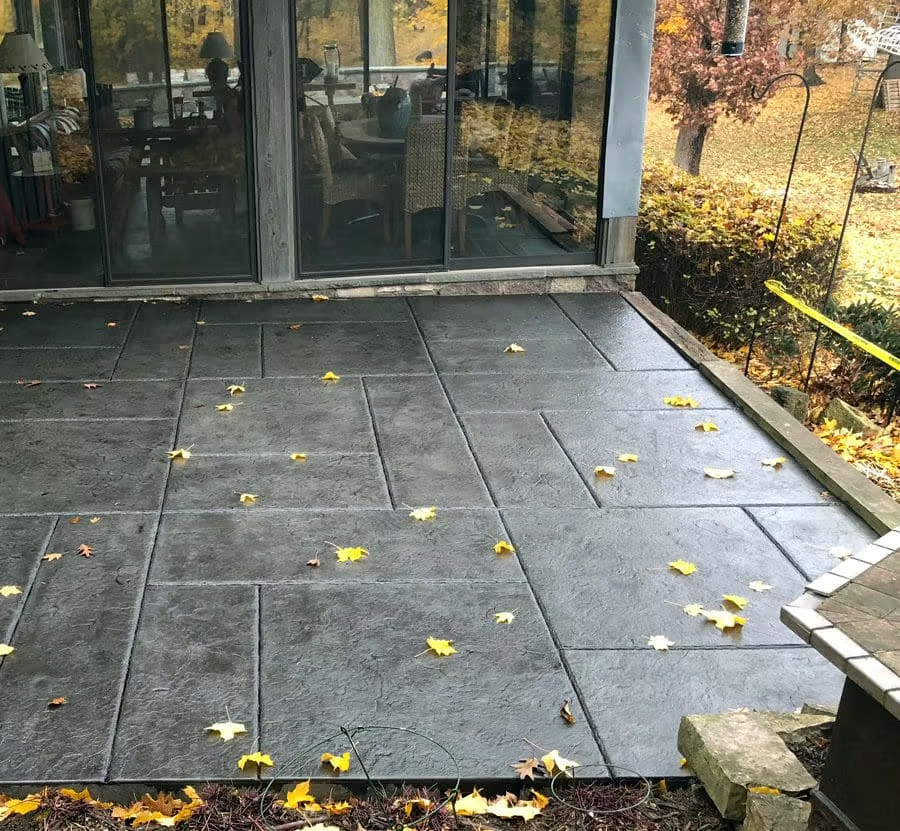
Adding a patio or a deck to your home is a great way to increase living space and enjoyment in your yard. It’s perfect for summer grilling, entertaining, and spending more time outside overall. Plus, if you’re practicing some form of social distancing this summer, gathering with small groups of friends and family may be less risky if you’re outside, most experts believe. Why not make your yard a beautiful and functional space? However, homeowners often debate the merits of concrete patios versus wooden decks. Which one is better and what are the pros and cons? (Spoiler: We’re Team Patio all the way!)
What’s the difference between a patio and a deck?
Let’s start with the basics. A patio is generally a paved area that is directly on the ground while a deck is a wooden structure that is built at least a little bit above the ground. Patios are usually less expensive to install while decks may have a better ROI.
Materials
Patios are usually made of poured concrete, which can also be stamped to provide a wide variety of looks. (Other common patio materials include pea gravel, brick, stone, or pavers.) Concrete is a popular patio material due to the fact that the material itself is inexpensive and it’s an easy way to get a durable, hard surface in a yard. Concrete is made of water, cement, and aggregates like crushed stone or sand. Concrete patios can crack and wear down over time, especially if they’re not maintained, although the average lifetime of concrete is up to 30 years. Concrete also needs to have proper drainage when installed.
Decks are generally crafted out of wood, such as redwood or cedar, although composite materials made of sawdust and plastic are popular, too. Certain species of wood are naturally resistant to rot and insects, although the level of resistance varies by species and how much heartwood the boards contain. A wood like cedar is on the softer side so it can easily be scratched by pets or furniture. Most wood decks will last 15-20 years although it degrades under less-than-ideal conditions, such as ground-level installation and in areas that are shaded.
Maintenance
Concrete patios need to be cleaned with a hard-bristled brush once a year. They should also be sealed every two years. Sealers are a great way to preserve your patio and make it easier to maintain. Sealers help maintain a patio’s color and can even intensify the color or add sheen. They also make the concrete easier to clean, since sealers prevent dirt and oil from penetrating. Sealers reduce water intrusion, which minimizes the risk of damage from freeze-thaw cycles. Lastly, sealers even prevent regular wear-and-tear in high traffic areas.
Wood decks, especially if they’re directly exposed to the elements, require annual power washing and a finish applied every three or four years. A preservative with a water repellent protects the surface and reduces hairline splits. A semitransparent stain is needed to maintain the wood’s natural color. Otherwise, the color will turn silvery gray.
Design options
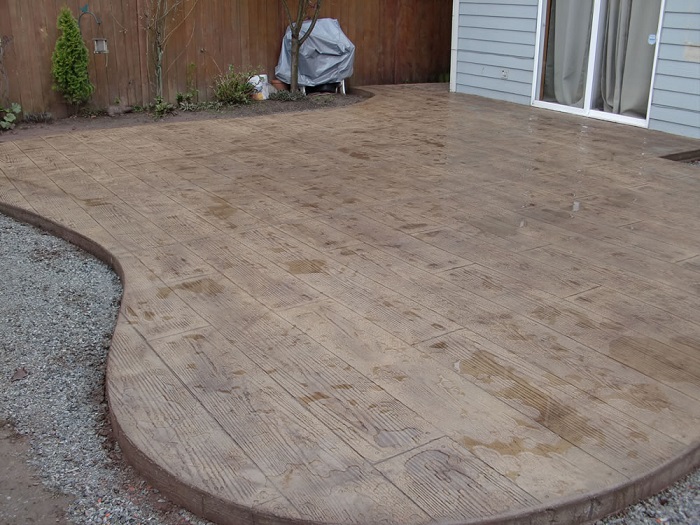
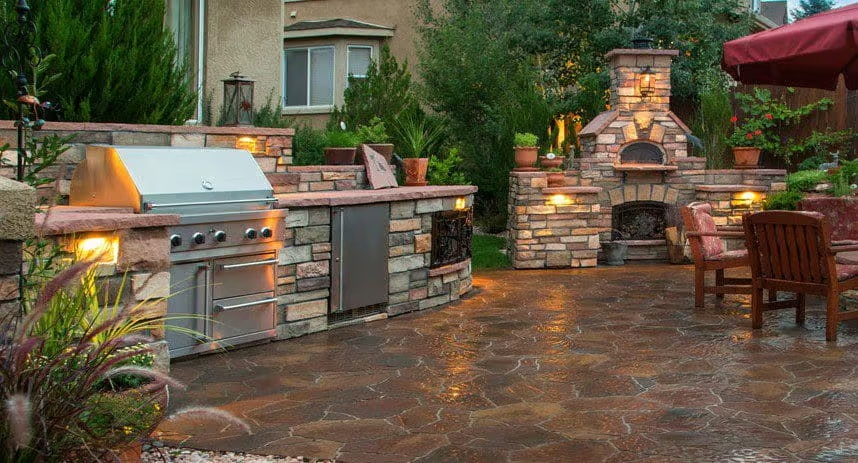
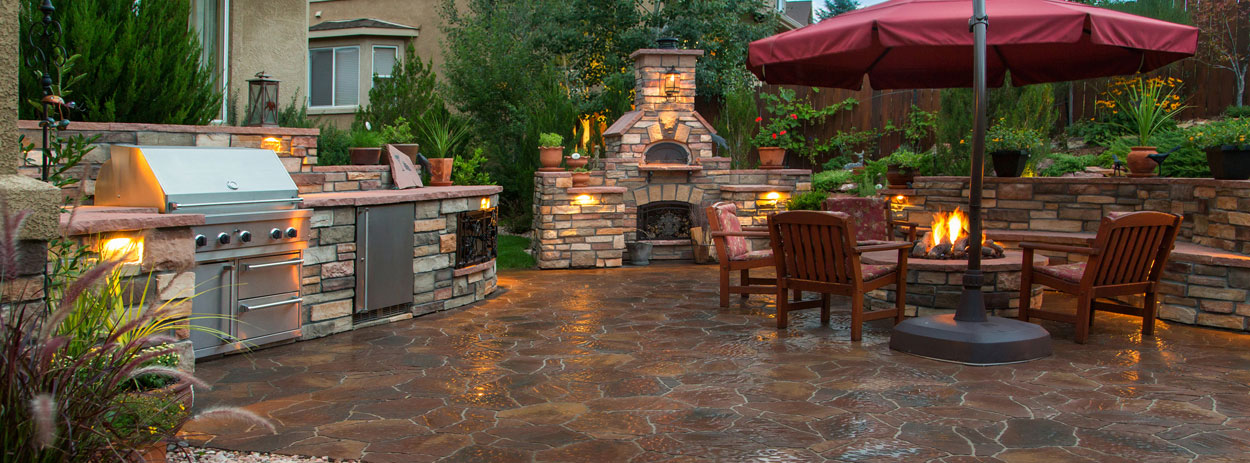
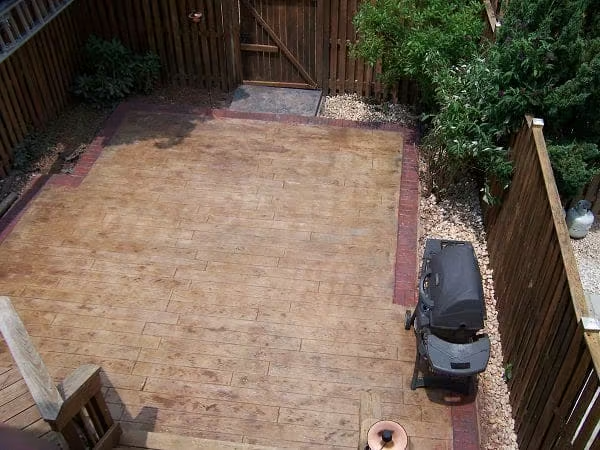
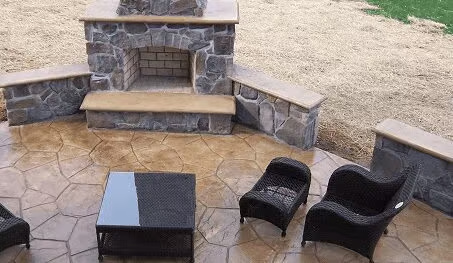
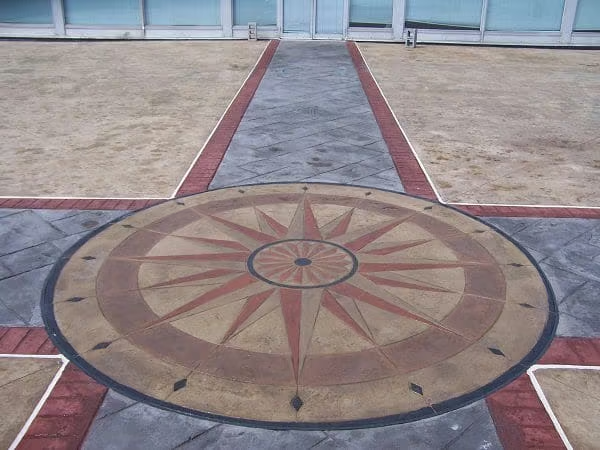
Since concrete is applied as a wet paste and it hardens over time, it provides many opportunities for custom design. Stamped concrete, as mentioned above, is the process of pressing flexible stamps into fresh concrete. A wide variety of stamps can mimic the texture of other materials, like stone, tile, brick, and wood. Plus, concrete can be dyed nearly any color. Due to these stamping and color options, concrete is extremely versatile. A concrete patio can seamlessly fit in with any home style, design, and decor. From rustic cabins to Adobe style and everything in between, a concrete patio will look fantastic.
Wood like cedar can easily be stained, colored, and treated with finishes. Due to the different dimensions and grades available, and since it can be easily cut, a wood deck is usually easy to build and it can work with many designs. However, a wood deck will always look like a wood deck, no matter how nice it is.
Sustainability
While concrete generates a high amount of carbon dioxide, a greenhouse gas, there are aspects of it that are actually considered sustainable. Concrete can be made from a variety of waste byproducts so it’s resource-efficient. Concrete is also extremely durable – generally double or triple the lifespan of other materials – and it won’t rust, rot, or burn. At the end of its lifespan, it can be crushed and used in pavement or roads.
Natural woods are often considered environmentally friendly because they’re renewable and biodegradable. If the wood contains an eco-friendly designation, like the Forest Stewardship Council, you can be reasonably sure that it’s a good green option.
The bottom line
We’re obviously biased when it comes to the best patio material but we’re consistently impressed by concrete’s durability and, above all, versatility. It can create truly beautiful outdoor areas. Browse our gallery for inspiration or check out our Pinterest board.