• The Benefits of Concrete Driveways

    Do your customers ever ask about the advantages of a concrete driveway versus an asphalt driveway? Often it can be difficult to convince a homeowner who has their heart set on asphalt to consider concrete instead because they’re concerned about the higher upfront costs. In this situation, what can you say to help clients see concrete in a different light? Here are four reasons why concrete is a great option for driveways (and other high-traffic surfaces).

    Why consider concrete, over asphalt, for your next driveway project?

    • Lasts for decades
    • Low maintenance
    • Lower life cycle cost
    • Can be extremely customized and designed
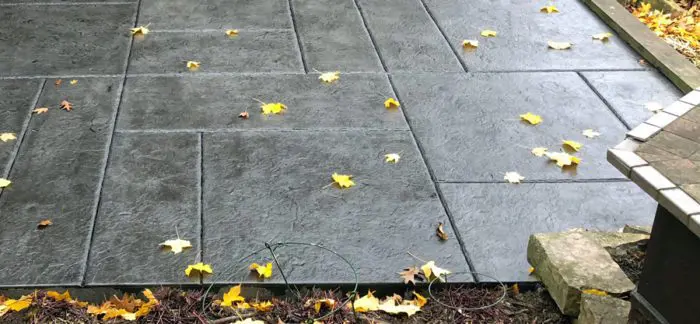
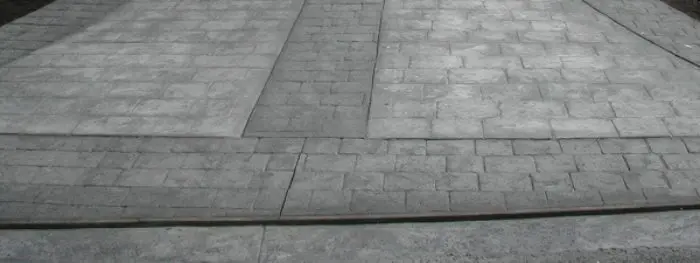
    Ashlar Stamped Concrete Driveway

    Durability

    Concrete is a sturdy option that will last up to 50 years, depending on climate and maintenance. Cracking and wearing may occur, of course, but concrete can be patched and repaired. In comparison, asphalt will last about 20 years. While asphalt is more easily repaired, it’s also considerably more prone to deterioration and damage since it’s softer than concrete.

    Both asphalt and concrete have climate considerations that affect durability. Concrete can be sensitive to extreme cold and can buckle, especially if not properly maintained.  On the other hand, the softness of asphalt makes it a less than ideal option for regions that experience high temperatures. Asphalt  becomes gooey when it’s hot and then hardens again when the temperature lowers. This softening and hardening cycle can cause the asphalt to sag or crack over time.

    Maintenance

    Concrete is relatively low maintenance. It may need to be cleaned with a brush annually. Most contractors recommend applying sealer every few years because it helps to preserve the concrete, can intensify the colors, and makes it easier to clean. More importantly, sealers can prevent damage from freeze-thaw cycles mentioned above. Asphalt is a more hands-on driveway material. Six to twelve months after installation, an asphalt driveway should be sealed, and this process should be repeated every three to five years.

    Life cycle cost

    Looking at the initial price of concrete versus asphalt, the latter does win out. Concrete can be two to three times more expensive than asphalt, but that’s not the end of the story. When you look at the whole life cycle of both materials and what they’ll cost during their lifetimes, concrete usually comes out on top thanks to its long life and low maintenance costs.

    Decorative options

    There’s no comparison here. Asphalt is black or dark gray. Sure, concrete is pale gray but many homeowners are unaware of how customizable it can be thanks to Proline concrete stamps and nearly endless color options. Concrete can be stamped to look like practically any other material;  stones, brick, tile, and even wood for example. With tinting and coloring products, concrete can truly be a work of art.

    To summarize

    • Concrete is more durable.
    • Concrete has an average lifespan of 50 years.
    • The only maintenance required is applying sealer every few years.
    • Concrete can be stamped with patterns, textures, and designs
    • Concrete can be tinted and stained with different colors and finishes.

    Find everything for your concrete project

    Calico Construction Products has the full line of Proline concrete stamps, colors, and more. Come shop with us or feel free to give us a call at 800-221-9469 with any questions. We’re here to answer your questions and help you find the best products for your job!

    Concrete News & Tips

  • Our Most Frequently Asked Questions About Stamped Concrete

    Here at Calico Construction Products, we know concrete well and we know how to help make it look great. Our customer service team fields a lot of questions, so we wanted to share a few that we hear on a regular basis.

    Take a look and let us know if you have more to add to the list!

    Can faded or cracked concrete be repaired?

    In most cases, yes! While concrete isn’t immune to deterioration from age, there are often ways to refresh and repair it. If your tinted concrete has simply faded over time, products like Proline’s Accent Water-Based Acrylic Stain, or EZ-Tique Antiquing Wash can restore your dull concrete. They are easy to use and give faded concrete a nice pop of color. Your surface must be porous, though, for the coloring product to adhere.

    Overlay is an effective and affordable way to repair cracked concrete. Once fixed, the concrete can be stamped and colored like new. For concrete overlays, use Proline’s Color Packs for your base color and products like Accent or EZ-Tique for highlighting and antiquing. This would replace color hardener and antique release in this application. Proline Pro-Stamp, a strong stampable overlay, transforms plain concrete into a surface that can be stamped with any decorative, textured finish. Proline ProSurfacer, a high strength polymer concrete overlay, is another product that can restore and repair stained and cracked concrete. This can be colored, broom finished, stained, the possibilities are endless. It is used in several overlay applications and can even be used as a patch and leveling compound that can fill and repair uneven concrete.

    Do I need more than one stamp to effectively stamp concrete and what is a “package” of concrete stamps?

    Yes, most times stamping concrete requires more than one stamp. Things to consider when deciding on how many stamps are needed for the project: How large is it, how much can I stamp before the concrete gets too hard? Where am I going to walk/stand while placing the pattern? Are there multiple pieces that work together to complete the pattern, i.e. an “A,” “B,” and/or “C,” stamp? We’ve listed the dimensions of all of our stamps online to assist in laying out your project.  Concrete stamps are designed to be used in multiples. Seamless stamps overlap while patterned concrete stamps are placed next to each with no gaps in between. The general recommendation is that you should have enough stamps to cover the width of the project, plus two.

    So what’s in a package of concrete stamps? Our packages contain the minimum number of stamps and accessories recommended for each pattern. This generally includes six rigid stamps, one thin flex, two touch-up skins, and the recommended chisels and/or wheels that best fit the pattern.

    Do I need to seal my concrete after stamping and coloring?

    Yes. Sealing maintains the color of your concrete. Sealing concrete enriches the color intensity — whether the color is integral, a stain or dye, or from color hardener. Sealers can add sheen to the concrete such as a high gloss or no sheen like a matte. Concrete sealers block the penetration of dirt, oil, grease and chemicals, and make the concrete surface much easier to clean. Sealers prevent water intrusion which can minimize freeze-thaw damage. Concrete sealers also help to prevent wear and tear from high foot and auto traffic areas.

    Concrete should be sealed every two years or more frequently if it’s exposed to extreme weather.

    What are release agents?

    You should always use a release agent. This substance, which is a bond breaker, prevents the concrete from sticking to the concrete stamps. Apply the release agent in either a liquid or powder form. Work as you go and don’t get too far ahead of the stamping.

    Traditionally there are two types of release, liquid and powder. Proline’s Antique Release powder comes in over 20 colors. Keep in mind: do NOT use powdered release on Proline’s Seamless Magnetic Skins.

    Proline’s Dura-Liquid Release promotes the release of stamps and texturing tools. Improve your results by ensuring tools don’t stick to wet concrete! The release is applied to the face of tools and skins, and directly to the surface of fresh concrete before stamping. This liquid product is less messy to apply than powders but it provides no color. For adding an antiquing color similar to that of what is produced with colored powder release, check out EZ-Tique.

    How can I add a base color to concrete?

    Concrete can be stained and tinted in a wide variety of colors and tones, and there are a few ways to accomplish this:

    • Color hardener is a popular technique that involves broadcasting the product onto wet concrete and then working it in with a trowel. Only the top surface is colored, so the color tends to be more intense. Since color hardeners increase the strength of concrete, they’re a great choice for outside projects and interior floors with heavy traffic.
    • Integral color is added to concrete prior to pouring. The color is consistent throughout the slab and won’t fade from exposure, but color is less vibrant than what you see with color hardener.

    Shop Calico Construction Products

    We have everything you need for your stamped concrete project. We take pride in helping our customers create fantastic concrete surfaces with our expertise and attention to detail. Browse our online store and contact us at 800-221-9469 if you have any questions!

    Concrete News & Tips

  • Concrete Patios Vs. Wood Decks

    Adding a patio or a deck to your home is a great way to increase living space and enjoyment in your yard. It’s perfect for summer grilling, entertaining, and spending more time outside overall. Plus, if you’re practicing some form of social distancing this summer, gathering with small groups of friends and family may be less risky if you’re outside, most experts believe. Why not make your yard a beautiful and functional space? However, homeowners often debate the merits of concrete patios versus wooden decks. Which one is better and what are the pros and cons? (Spoiler: We’re Team Patio all the way!)

    16 Point Star Medallion (MD7900) by Interscope Contractors
    Stamped concrete featuring a tinted medallion by Interscope Contractors

    What’s the difference between a patio and a deck?

    Let’s start with the basics. A patio is generally a paved area that is directly on the ground while a deck is a wooden structure that is built at least a little bit above the ground. Patios are usually less expensive to install while decks may have a better ROI.

    Materials

    Patios are usually made of poured concrete, which can also be stamped to provide a wide variety of looks. (Other common patio materials include pea gravel, brick, stone, or pavers.) Concrete is a popular patio material due to the fact that the material itself is inexpensive and it’s an easy way to get a durable, hard surface in a yard. Concrete is made of water, cement, and aggregates like crushed stone or sand. Concrete patios can crack and wear down over time, especially if they’re not maintained, although the average lifetime of concrete is up to 30 years. Concrete also needs to have proper drainage when installed.

    Decks are generally crafted out of wood, such as redwood or cedar, although composite materials made of sawdust and plastic are popular, too. Certain species of wood are naturally resistant to rot and insects, although the level of resistance varies by species and how much heartwood the boards contain. A wood like cedar is on the softer side so it can easily be scratched by pets or furniture. Most wood decks will last 15-20 years although it degrades under less-than-ideal conditions, such as ground-level installation and in areas that are shaded.

    Maintenance

    Concrete patios need to be cleaned with a hard-bristled brush once a year. They should also be sealed every two years. Sealers are a great way to preserve your patio and make it easier to maintain. Sealers help maintain a patio’s color and can even intensify the color or add sheen. They also make the concrete easier to clean, since sealers prevent dirt and oil from penetrating. Sealers reduce water intrusion, which minimizes the risk of damage from freeze-thaw cycles. Lastly, sealers even prevent regular wear-and-tear in high traffic areas.

    Wood decks, especially if they’re directly exposed to the elements, require annual power washing and a finish applied every three or four years. A preservative with a water repellent protects the surface and reduces hairline splits. A semitransparent stain is needed to maintain the wood’s natural color. Otherwise, the color will turn silvery gray.

    Design options

    Wood Plank Concrete Stamped Deck
    Wood Plank Concrete Stamped Deck

    Since concrete is applied as a wet paste and it hardens over time, it provides many opportunities for custom design. Stamped concrete, as mentioned above, is the process of pressing flexible stamps into fresh concrete. A wide variety of stamps can mimic the texture of other materials, like stone, tile, brick, and wood. Plus, concrete can be dyed nearly any color. Due to these stamping and color options, concrete is extremely versatile. A concrete patio can seamlessly fit in with any home style, design, and decor. From rustic cabins to Adobe style and everything in between, a concrete patio will look fantastic.

    Wood like cedar can easily be stained, colored, and treated with finishes. Due to the different dimensions and grades available, and since it can be easily cut, a wood deck is usually easy to build and it can work with many designs. However, a wood deck will always look like a wood deck, no matter how nice it is.

    Sustainability

    While concrete generates a high amount of carbon dioxide, a greenhouse gas, there are aspects of it that are actually considered sustainable. Concrete can be made from a variety of waste byproducts so it’s resource-efficient. Concrete is also extremely durable – generally double or triple the lifespan of other materials – and it won’t rust, rot, or burn. At the end of its lifespan, it can be crushed and used in pavement or roads.

    Natural woods are often considered environmentally friendly because they’re renewable and biodegradable. If the wood contains an eco-friendly designation, like the Forest Stewardship Council, you can be reasonably sure that it’s a good green option.

    The bottom line

    We’re obviously biased when it comes to the best patio material but we’re consistently impressed by concrete’s durability and, above all, versatility. It can create truly beautiful outdoor areas. Browse our gallery for inspiration or check out our Pinterest board.


  • The Many Benefits of a Concrete Pool Deck

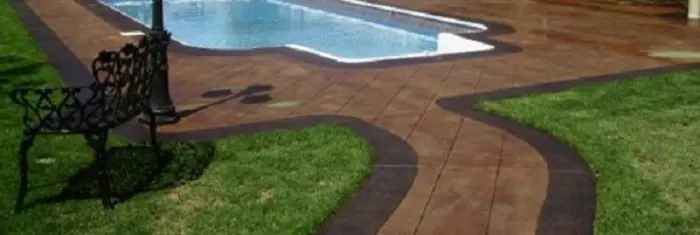
    Have you been dreaming about adding a swimming pool to your backyard? While no small task, if you have the budget for your own personal pool, it’s the perfect way to enjoy the outdoors while getting some low-impact exercise. Opting for a concrete pool deck over wood or stone is a smart choice if you want a pool that has a luxurious look without a hefty price tag.

    Decorative concrete benefits

    Exposed aggragate pooldeck by Baltz and SonsIf the plain grey concrete at your community pool comes to mind, think again. Concrete has a wide variety of decorative options that can match or accentuate any home. Maybe you want to imagine your pool is in the Mediterranean or some tropical locale, or perhaps you want a modern pool that complements your home. No matter the style, concrete can get the job done. Here are just a few stamping options (but make sure to check out our full selection!).

    • Wood stamps mimic the look of real wood without requiring any trees to be cut down. Plus, you won’t have to worry about replacing real wood planks that get damaged by moisture or chemicals. (Added bonus? No slivers!)
    • Tile stamps provide a classic look while avoiding complicated installation and messy grout, which can crack. With so many color, texture, and shape options, you’ll find something that gives you a look you love.
    • Random stone is another beautiful option that gives you the look of real stone and comes in a variety of styles, from sandstone to garden stone to slate.

    Don’t forget about the little touches that can really make your pool deck special! Border art and decorative accents provide the details that bring your whole look together. A variety of animal and plant stamps offer the ability to truly personalize your new pool, whether you want something cute, rustic, or classic. Plus, consider a statement piece like a compass rose stamp or a gorgeous medallion for a show-stopping space.

    And what about color? The options are endless. Deep gray decks can mimic slate or stone, while browns, which often look nice with many homes, can cover everything from light tan to rich walnut. Light colors like white are increasing in popularity too. Besides staying cool, white is often considered to be a minimalist and modern color choice.

    Functional benefits

    Concrete is a workhorse, which makes it perfect for a home pool:

    #1: Concrete is durable. They use it for roads, after all! When you use concrete, you won’t have to worry about replacing it for a long time, even when exposed to harsh weather. While a concrete pool deck may end up with cracks over time, they’re easily fixed with a patch kit. Even the intense chemicals from the pool won’t affect your concrete’s durability or color if you’ve used the proper sealant.

    #2: Concrete is less expensive than other options. Cheaper than stone or tile, concrete is a great cost-effective options. Labor is also usually less expensive.

    #3: Concrete is low maintenance. Without any grout lines or gaps to deal with, you can easily clean your pool deck once a year with a power washer.

    #4: Concrete can be treated so it’s not slippery. Normally, yes, wet concrete is slippery. That’s why we always recommend that contractors incorporate a non-skid additive into the concrete to ensure that no one slips when they’re walking around the pool. It’s a quick and easy process that you’ll appreciate every time you use the pool.

    Additional enhancements

    Once you have your beautiful, stamped pool deck installed, you might wonder how else you can customize your space! Consider incorporating the following elements into your outdoor area:

    • Landscaping: Plants accentuate a pool and provide focal points. Landscaping also adds privacy and can help muffle sound. Trellises and climbing plants can create a beautiful living wall, while raised planters add visual interest.
    • Lighting: You can’t go to a garden store without seeing little string lights — people love outdoor lights! Use them to your advantage and create a magical space by using pathway lighting and uplighting on interesting elements or beautiful trees. Line the perimeter of your pool with lights for a dramatic look and use lighting around your seating area for comfortable evening lounging.
    • Living space: You’re going to be using your pool all summer (or maybe even year-round), so make sure that it’s comfortable for all your guests. Invest in a variety of comfortable seating options and use umbrellas or awnings to create ample shade. Consider including a grilling or outdoor kitchen area if your space permits. Plus, make sure to decorate!

    A note on safety:

    Safety is so important, as well as required by insurance and building codes. If you’re installing a new pool, be sure to follow the recommended guidelines for your area, whether they include installing a locked gate, adding a pool cover, or utilizing sensors or an alarm system.

    Interested in more? Check out our Pinterest board for more great ideas!


  • Decorative Concrete for Interior Floors

    Have you considered decorative concrete for your interior floors?

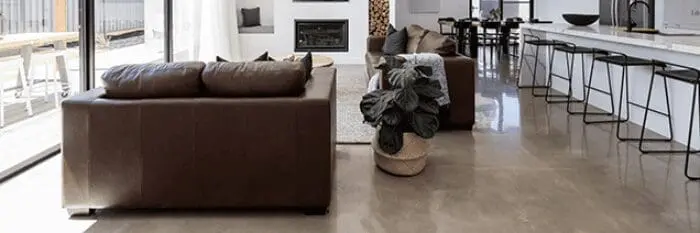
    When you think of concrete floors, cold grey basement slabs probably come to mind — not something that brings a unique, beautiful look to your living areas. While there are some special considerations for internal use, concrete floors can be a utilitarian and gorgeous option in a home or business.*

    When to install concrete in a building

    Floor Seasons 2nd place
    Beautiful interior floor by Floor Seasons in Las Vegas

    Admittedly, concrete doesn’t work in all buildings. If a home has no existing concrete slab, then installing a new concrete floor is not a practical option. Concrete works best when pouring a fresh slab or adapting an existing slab. Sometimes, it may be possible to pour an overlay over a subfloor, but this generally requires careful structural reinforcement due to its heavy weight.

    Pros of a concrete floor

    • Durable: Concrete’s hardness and strength means that it’s not easily damaged. That’s why it’s used for driveways and roads! It can withstand pets, spills, high heels, heavy furniture, and dropped items. When properly installed and maintained, it will last for years.
    • Easy to maintain: When properly sealed, concrete is easy to clean and requires only a quick sweep and damp mopping. Experts do often recommend resealing your concrete on a regular basis although the frequency depends on usage and climate.
    • Ability to add radiant heat: Concrete can be cold underfoot but radiant heat can easily be added underneath to provide a warm, comfy feeling. Embed hot water tubes or cables within the concrete!
    • Design options: There are so many design options with a concrete floor! We’ll get into that below.

    Cons of a concrete floor

    • Hardness: The quality that makes concrete so durable also – unfortunately – makes it uncomfortable. Concrete can be too hard underfoot, especially if it’s in an area where one is standing often. For some families, like those with small children, the risk of falling on such a hard surface might be concerning.
    • Moisture: This can be an issue in certain types of basements because moisture can travel up from beneath the slab. To avoid dampness and possible surface damage, proper sealing and mitigation of outside moisture issues (like bad soil drainage or leaky gutters) is vital.
    • Cracking: Concrete can develop cracks over time but patching materials can remedy most problems.

    Design options for concrete floors

    Let’s get to the good stuff! Concrete floors can be an absolute show-stopper. They look especially great in homes or businesses that have an industrial or modern style. There are so many tinting, staining, texturing, and stamping options that can be mixed and matched to create a one-of-a-kind look.

    Color can be applied by adding dyes to wet concrete for a vibrant look. Stains provide a translucent effect and integral color is added during the mixing process. Color hardeners give fresh concrete surface-level coverage.

    Texture is achieved through a wide assortment of Proline stamping tools that can be used to make your concrete look like brick, stone, wood, ceramic tile, and more.

    Polish a floor by using a series of abrasive pads and then applying a sealer. This gives a floor a shiny, smooth finish.

    Acid stain gives floors a marble-like mottled appearance that is completely unique.

    If you are looking to get started on an interior floor project, shop our products or contact us with questions. If you need to find a contractor in your area to perform the work, we can help there too!


  • Four Trends for Outdoor Kitchen Spaces

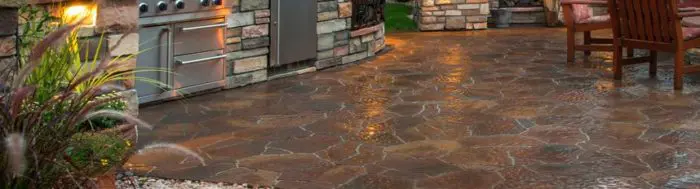
    Stamped Concrete Patio with Outdoor Kitchen, Fireplace, and SeatingSpring is in the air and our thoughts are turning to beautiful and functional outdoor kitchens. While most of us already have a backyard grill, there are many ways to enhance your outdoor spaces no matter your budget or climate. Let’s take a look at some of the top trends in outdoor kitchens!

    Trend #1: Go beyond the slab

    fenced-in wood plank stamped patio with grill and seating
    Looks like wood…without the trees!

    We’ve all seen patios consisting of a sad little square of grey concrete. Concrete is durable, cost-effective, and low maintenance. However, with so many tinting and stamping options available, concrete can be versatile and beautiful! Don’t settle for a boring slab. Proline’s concrete stamps will meet any design needs, whether you want the look of brick, reclaimed wood planks, stone, or slate. (Contractors will especially love Proline’s Seamless Magnetic Pattern Concrete Sets, which are lighter than traditional skins but twice as rigid and practically indestructible.)

    And what about color? Concrete can shine thanks to acid stains, color hardener, antiquing wash, and acrylic stains in any color and combination you could want. There are a variety of methods that professionals use for tinting concrete. Ask your contractor about the optimal method for your particular project, climate, and usage.

    concrete patio walls

    Trend #2: Concrete patio edging

    A patio needs edging to define the space and keep grass at bay. Concrete edging is popular because not only does it give you a clean look, but it’s durable and easily cleaned. Consider adding in planters, flowerbeds, or even low walls to help define your patio. For a utilitarian option, concrete countertops can be incorporated into the edging to give your patio a seamless, custom look with plenty of workspace.

    Trend #3: Amp up the grilling situation

    A simple gas or charcoal grill can get the job done but today there are so many luxury-style grills available at affordable prices. Why not upgrade? If you walk into any big box home improvement store, you’ll find a wide variety of options that offer flexibility and quality.  Thanks to the proliferation of add-on features, such as side burners, variable temperature control, warming racks, and even searing grills, you can find exactly what you want. Hybrid grills even give users the option to switch between charcoal and gas. Once you have your grill, think about other types of cooking options you might enjoy, like a smoker, open-flame cooking, or even a pizza oven. If your budget is on the high end, outdoor sinks, wine coolers, refrigerators, and more are becoming increasingly popular.

    Trend #4: Cover it up

    To ensure your area can be used no matter the season, consider partially enclosing your patio to protect it from heat and rain. A closed-roof awning can be as simple or as complex as you like, while protecting your valuable furniture and appliances. From metal, glass, or plexiglass canopies, to a variety of wood options, a roof over your patio is a great way to enjoy the outdoors in comfort. If you don’t mind being exposed to the elements, options like fabric covers, vine-covered lattices, or exposed beams can provide shade with max style.

    To find more incredible concrete ideas, visit our idea gallery!


  • Update Your Garage Floor

    Is your garage floor looking a little grungy? It’s no surprise! Garages are subject to extreme treatment. Pressure from your vehicles, extreme temperature swings, oil drips; your garage floor withstands a lot.

    If you want to give your garage floor a brand-new look, consider applying a concrete resurfacing product. Available in different looks, textures, and colors, these products are perfect for enhancing your garage. Please note: these products are intended for use by licensed and trained professionals. You can find contractors in your area that do this type of work under the Find A Contractor tab on ConcreteNetwork.com

    Before you consider a resurfacing project, ensure your garage is only suffering from aesthetic issues. Any shifting, crumbling, or cracking is a sign of structural damage and you’ll want to get those taken care of first.

    Deco-Flake System by Proline

    Deco-Flake is a 100% solids epoxy floor coating system. Decorative color flakes are integrated into a colored base coat and sealed with clear epoxy and/or polyurethane or polyaspartic topcoats. It’s designed for use in numerous residential and commercial applications. Deco-Flake is a decorative and durable chemical-resistant coating, so it’s perfect for garages (as well as showrooms, commercial kitchens, and more). DecoFlake is designed to be used as a medium to heavy-duty coating.

    As with all coating processes, ensure that you prep your surface properly. Newer concrete should be at least 28 days old. The surface must be free of dust, dirt, oil, grease, paints, glues, sealers, or any other contaminant that may serve as a bond breaker. It should also have a porous, textured profile comparable to 60-grit sandpaper or rougher. Proline’s Dura-Clean and Dura-Etch are great products for surface prep when used with a turbo nozzle on your pressure washer.

    There are several color combinations you can choose from when using a flake system. You’ll want to use a colored base coat that compliments your selection of flake colors. If you are in an area where moisture is an issue, be sure to use a Vapor Block Epoxy as a primer before applying Epoxy 100. When applying a Light to Medium broadcast of flakes, your base color will show through. In areas where direct and indirect sunlight, or fluorescent lights will hit the floor, you’ll want to use a Poly HD Color over your Base coat before broadcasting your flakes. After your flakes are set and your excess flakes are cleaned off and scraped flat, you’ll want to top with Poly HD Urethane Clear. Depending on the smoothness of the surface and look you desire, as well as, if slip resistance is a concern, your sealing process may vary. Please consult the detailed instructions on the technical data sheets created by the manufacturer for step by step instructions. Avoid traffic on floor for 48 hours and heavy abrasion or chemical exposure for 5 days once complete.

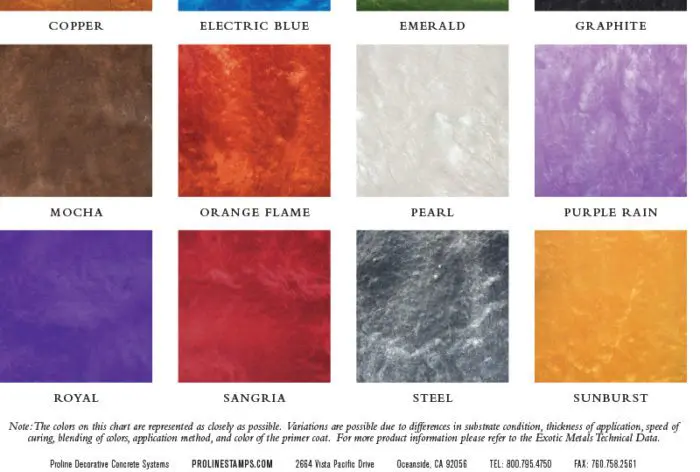
    exotic metals chartExotic Metals by Proline

    Proline’s Exotic Metals is a three-dimensional metallic epoxy system designed to create elegant, beautiful and unique seamless floors. Exotic Metals is a 100% solids, two component, epoxy formulation with high strength and excellent impact resistance.

    As with all coating processes, ensure that you prep your surface properly. Newer concrete should be at least 28 days old. The surface must be free of dust, dirt, oil, grease, paints, glues, sealers, or any other contaminant that may serve as a bond breaker. It should also have a porous, textured profile comparable to 60-grit sandpaper or rougher. Proline’s Dura-Clean and Dura-Etch are great products for surface prep when used with a turbo nozzle on your pressure washer.

    ****Important – Before applying Exotic Metals always blow the entire surface to be coated, including around all the edges, corners and under walls to be sure no loose debris will come out during the Exotic Metals application. Loose debris hidden under drywall can become embedded in the Exotic Metals if not removed.

    Similar to the Deco-Flake system, you will use a primer coat. If moisture is an issue, you’ll want use the Vapor Block Epoxy rather than the Epoxy 100. After drying, approximately 12-15 hours, you’ll apply the Exotic Metals. There are several techniques to create a unique finish including Blowing and Color Blending. For a less mottled look, use the Solvent technique. For application and technique instructions, please refer to the Tech Data sheet by Proline.

    100% solids epoxies are very hard and durable, but because of their hardness they scratch and dull over time. In order to keep the metallic finish, it is important to apply a thin topcoat sealer or maintain a sacrificial coat of floor finish or floor wax over the surface.

    Gallery

    Check out these great looks!

    Decko Flake concrete floor
    Decko Flake concrete floor


    Exotic Metals in Emerald - finished floor
    Exotic Metals in Emerald – finished floor


    Exotic metals in mocha - finished floor
    Exotic Metals in Mocha – finished floor


    Exotic metals blend - finished floor
    Exotic Metals Blend – finished floor

    Visit Calico Construction Products for more products, ideas, and tips or contact us!

  • If you find calculating how much integral color you need to complete the job confusing, you are not alone. It is confusing and if you don’t need to do it often, it’s annoying.  I’m going to break this down for you and make it as easy as I can.

    These are the steps you need to take:

    (more…)