• Ideas for Adding Plants to Your Decorative Concrete Project

    Ready to bring a little life to your hardscape? Incorporating plants into outdoor spaces that feature decorative concrete can add vibrant appeal. Depending on the project, there are a variety of ways in which adding plants can bring a splash of color, natural textures, and dynamic contrast to a home’s exterior. However, it’s important to be thoughtful and deliberate when adding plants so you can maximize their natural effects and ensure they’ll thrive in their environment.

    Read on to discover the basics of integrating plants with concrete, design principles to consider, methods of making concrete look more natural, maintenance tips for your project, and some tips for getting your project started.
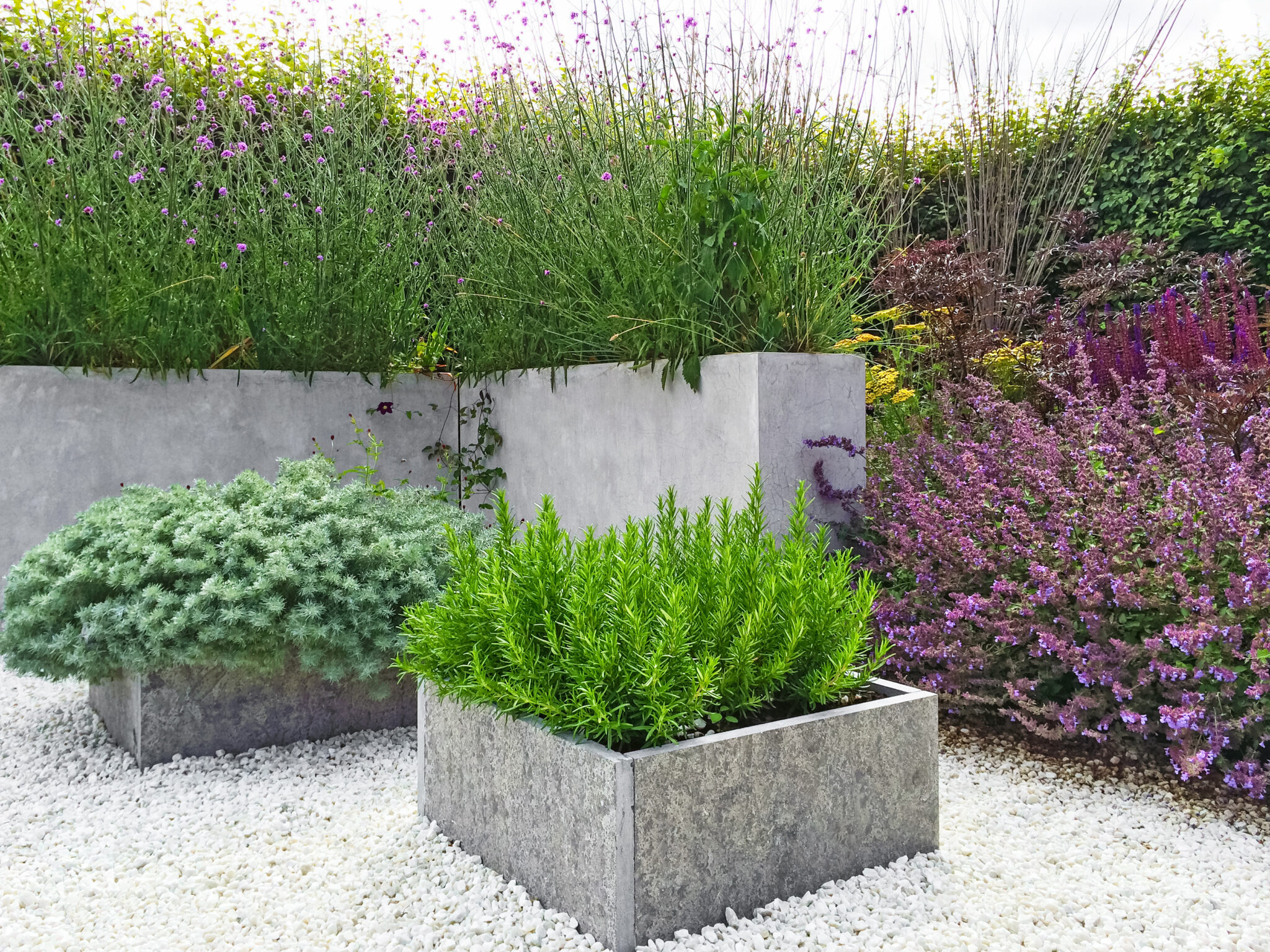
    Beautiful garden with concrete planters.

    Design strategies for integrating plants with decorative concrete

    While there are plenty of ways to incorporate plants with concrete, sticking to simple methods that require little upkeep is the best place to start.

    Although some concepts should be considered before concrete is laid, adding plants to existing concrete spaces is possible. We recommend researching which plants do best in your environment and whether they can thrive in your design. With just a little planning, you can save time and money down the road.

    Vertical gardening

    If you have limited space to work with or want to use a large variety of plants, a vertical garden on a concrete wall is a great option. This approach maximizes garden space and adds a lush green backdrop that enhances the aesthetic appeal of stark concrete surfaces. Techniques such as installing modular planters, using trellises, or incorporating felt planting systems can transform plain walls into vibrant living art pieces. Vertical gardens can then be complimented with wall fountains or concrete stamps that feature organic material.

    Built-in planters

    Integrating built-in planters into concrete structures such as patios, stairs, and walls is a sleek way to infuse greenery while maintaining a modern design aesthetic. These planters can be designed to fit into the features so they blend well while providing growing spaces. For example, embedding planters along the edges of concrete patios or using the risers of staircases for small herb or flower gardens can save space and add a unique element of nature. Built-in planters can also help manage drainage and protect structural integrity by controlling where water accumulates and flows.

    Between steps and along walkways

    Incorporating walkable plants between paver stones enhances the aesthetic appeal of walkways by introducing a burst of nature into hard landscaped areas. Plants like creeping thyme, moss, and sedum are popular for their resilience to foot traffic and ability to thrive in limited soil space. These plants soften the rigid lines of pavers, adding a lush, green element that can also reduce heat reflected off the stones while deterring weeds from growing. Such plants are also excellent for lining always or other concrete areas that may experience foot traffic.

    Design principles for integrating concrete and plants

    Not all design concepts need to involve plating plants into concrete structures. Simply adding plants around concrete surfaces can create plenty of aesthetic appeal.

    Mixing concrete and plants in your garden is all about finding the right balance and adding a splash of contrast to spice things up. Think of it like a dance between the heavy, steadfast nature of concrete and the soft, whimsical qualities of plants. You can achieve balance by placing lighter, airy plants like ornamental grasses or delicate ferns beside your sturdy concrete elements. This approach softens the hard edges and heavy concrete feel, creating a well-thought-out and harmonious garden.

    For a bit of contrast, try pairing bold, vibrant plants against the neutral concrete backdrop. Imagine bright green hostas or colorful annuals popping against a sleek gray concrete walkway. It’s all about making those plants stand out and giving your eyes something exciting to latch onto. And don’t forget texture! Mixing smooth concrete with rough, chunky succulents or bushy shrubs adds a tactile dimension that makes a space come alive.

    Using shapes wisely can also elevate your garden’s design. Square concrete planters or rectangular stepping stones provide a crisp, structured look that contrasts wonderfully with the wild, free forms of plant life.

    Methods for making concrete look more natural

    While plain slate concrete can create appealing contrasts with plants, creating a more natural look with concrete provides a much more harmonious look and feel.

    Add color to your decorative concrete to mirror nature

    Concrete stain is an excellent tool for designers and homeowners looking to match or complement the natural surroundings. Unlike paints, stains penetrate the concrete surface, offering more durable and permanent coloration that doesn’t wear off over time. Concrete colors come in various earth tones and vibrant colors and can be applied in different ways, allowing for complete customization.

    You can choose shades that mimic the dark browns of soil, the sandy tans of beaches, or the subtle grays of natural stone. These stains can be applied uniformly for a consistent color across the surface or varied to create natural color fluctuations that you would see in stone or wood. This variability can be enhanced by applying different colors in layers, achieving a depth of color that resembles natural materials more closely.

    Patterns: stamping and shaping concrete with natural textures

    Patterns in concrete can be applied through stamping, a technique where mats or stamps embossed with specific textures are pressed into the concrete before it fully sets. These stamps are often shaped like natural materials such as stone, brick, or wood, giving the hardened concrete the appearance of these textures.

    Stamped concrete can provide natural appearances to patios, walkways, and more to create a natural look that will make your plants look more at home. Edge details, varying shapes, and sizes of the ‘stones’ or ‘planks’ can all contribute to a more realistic appearance. Some stamps can even mimic trees and other natural features that can be used as planters or focal points in your design.

    Maintenance tips for concrete and plant integrations

    To avoid constant maintenance or unnecessary repair costs, carefully consider which plants you want to include and have a maintenance plan for your concrete surfaces.

    Best practices for maintaining the health of plants near concrete

    When plating in and around concrete, it’s important to ensure that the health of the plants is not affected by their hard surroundings. Concrete can alter soil pH, making it more alkaline, which may affect plant growth. To avoid this, use a garden soil and mulch buffer between the concrete and the plants. This can help maintain soil neutrality and retain moisture, providing a healthier environment for plant roots.

    Above all, proper drainage is crucial. Planting areas near concrete should have enough drainage to prevent water from pooling, which can lead to root rot and other moisture-related diseases. Raised beds or well-draining pots can be effective, especially in flat concrete areas like patios or driveways.

    It’s also essential to choose plants that are robust enough to thrive next to concrete, such as those that can tolerate a higher pH and more intense heat during sunny days, as concrete can radiate heat. Adjusting watering schedules based on the increased heat and potential for faster soil drying is key to keeping these plants healthy.

    How to care for features to prolong their life and appearance

    Concrete, while durable, requires proper care to maintain its aesthetic and structural integrity over time. Regular cleaning removes dirt and debris and prevents staining and moisture retention. For cleaning, use a pressure washer or a hose with a suitable cleaner that does not damage the concrete.

    Sealing concrete every few years is crucial to protect its surface from weathering, staining, and cracking. Sealants not only preserve the look of the concrete but also enhance its color and protect against water penetration, which can lead to freeze-thaw damage in colder climates.

    Check the integrity of joint sealants and reapply them as necessary to ensure that the joints between concrete slabs remain well protected from water and plant roots, which can cause heaving and cracking.

    How to plan your outdoor plant and concrete project

    If you need ideas for your project, check out our Idea Gallery and Pinterest page, which include plenty of images to get your creativity flowing. You can make progress toward shaping your space by asking your local nursery which plants grow well in concrete or near hot surfaces.

    If you want to make the most of your project, our concrete stamps, stains, and sealers will help you create the perfect blend of natural concrete concepts with whichever plants you choose. When you’re ready to get started, call 800-221-9469 or reach out to our team of experts, and we’ll be happy to help make your outdoor sanctuary dreams come true.
  • Unveiling the Future: Decorative Concrete Trends for 2024

    The new year is a symbolic transition between the past and the future. Its significance varies from person to person, but in our industry, it’s an exciting time when we anticipate new influential trends and say farewell to the fads that have outworn their welcome.

    In the ever-evolving world of design, architecture, and construction, concrete redefines aesthetics for residential and commercial spaces. Although it’s been used as a building material for thousands of years, it remains at the forefront of emerging styles. It’s versatile and dynamic and offers broad indoor and outdoor possibilities.

    We’re anticipating great things in our industry this year! Read on below for our take on up-and-coming sustainable concrete solutions, innovative textures and finishes, technological advances, and exciting indoor and outdoor design trends for incorporating decorative concrete:

    Eco-friendly concrete solutions

    Sustainability is no longer just a buzzword; it’s a way of life. That’s why it should come as no surprise that eco-friendly concrete solutions are rising in popularity. While limestone is the predominant raw material for cement, manufacturers increasingly incorporate recycled materials, such as fly ash, slag cement, and silica fume, into their concrete mixes. Even crushed glass, recycled plastic, metal shavings, and marble chips can be added for artistic effect.

    Innovative texture and color

    Texture and finish are critical elements in decorative concrete, and in 2024, we expect an influx of ideas that go beyond the conventional. From intricate patterns inspired by nature to bold geometric designs, decorative concrete will continue elevating into an art form.

    Concrete patterns

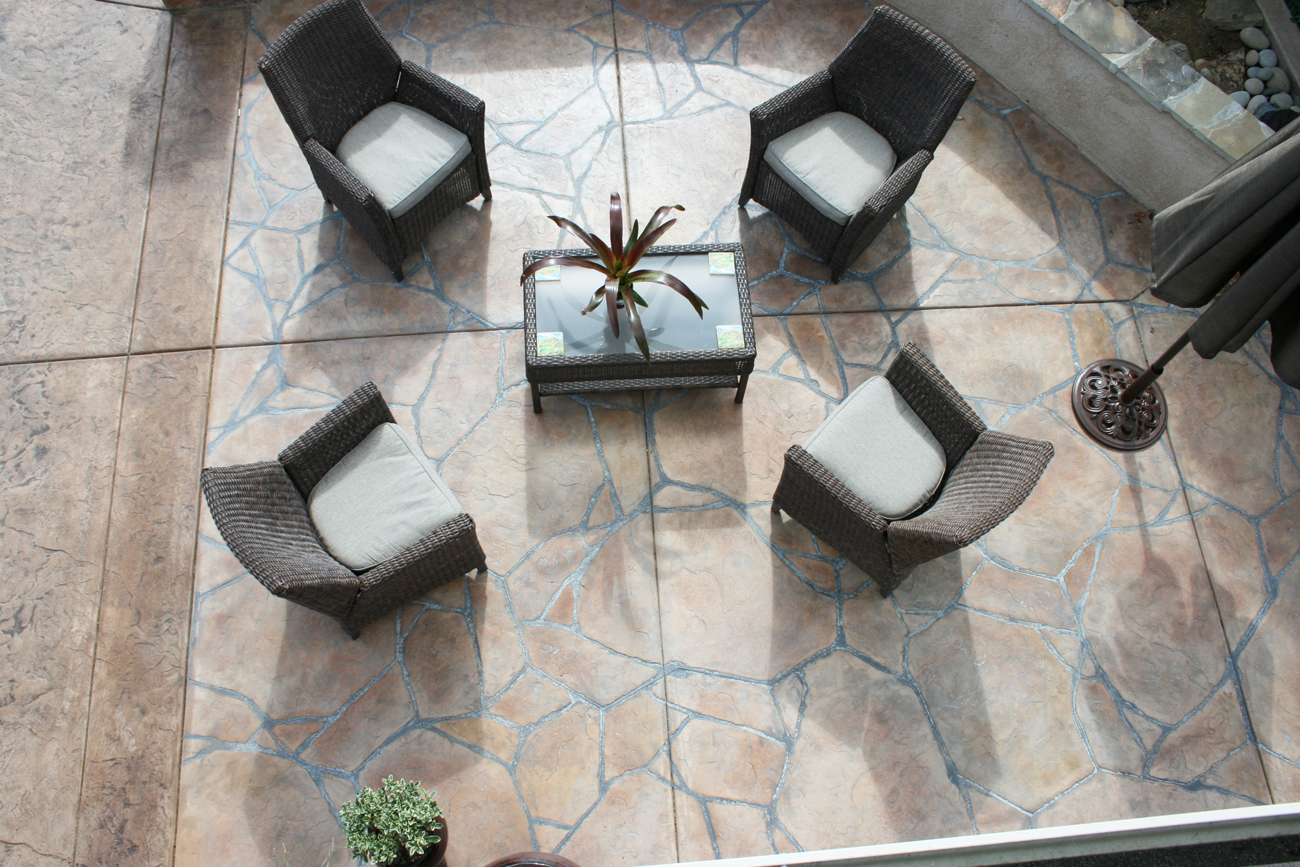
    Paving patterns are already trending for interior design, and the same concepts are now making their way outside. It’s no surprise since concrete stamp patterns can transform any plain surface into a breathtaking element in any outdoor space.

    Want a more natural look to your space? Wood-textured concrete stamps give concrete a natural feel while maintaining the bold features of industrial design. This seamless blending of styles is gaining popularity thanks to the biophilic design movement.

    Color considerations

    Concrete doesn’t have to be gray! While neutral colors are trendy and often found in industrial design, many options are available to add depth to any commercial or residential project. Proline offers a wide range of integral and topical coloring products that feature only the highest quality, UV-stable pigments to guarantee striking, long-lasting color. If you want to add colorful accent features or pursue a bolder palette, go for it!

    Smart and responsive concrete

    As technology continues to infiltrate every aspect of our lives, it’s no surprise that it’s also making its mark on the world of decorative concrete. Smart concrete, embedded with sensors and responsive to external stimuli, is set to revolutionize how we interact with our surroundings. Imagine a driveway that heats up to melt snow or a patio that changes color with the touch of a button! Another innovation in development is self-repairing concrete that can heal cracks and other damage on its own. The possibilities are inspiring.

    Create something you love

    While trends and other design concepts can help you find inspiration for your outdoor space, what matters most is that you enjoy it. It’s your space, after all! Being confident in your decisions and doing adequate research on contractors or landscapers, if needed, will help ensure you have a space you will love for years to come.

    Calico Construction Products can help

    Whether you want the trendiest yard in the neighborhood, the most fantastic office entry, or just a tiny improvement from what you have now, we’re here to help! If you’re looking for suitable decorative concrete materials to transform a space, contact our experts to get the perfect products for the job.

  • Concrete is the Perfect Material to Create a Stunning Outdoor Kitchen

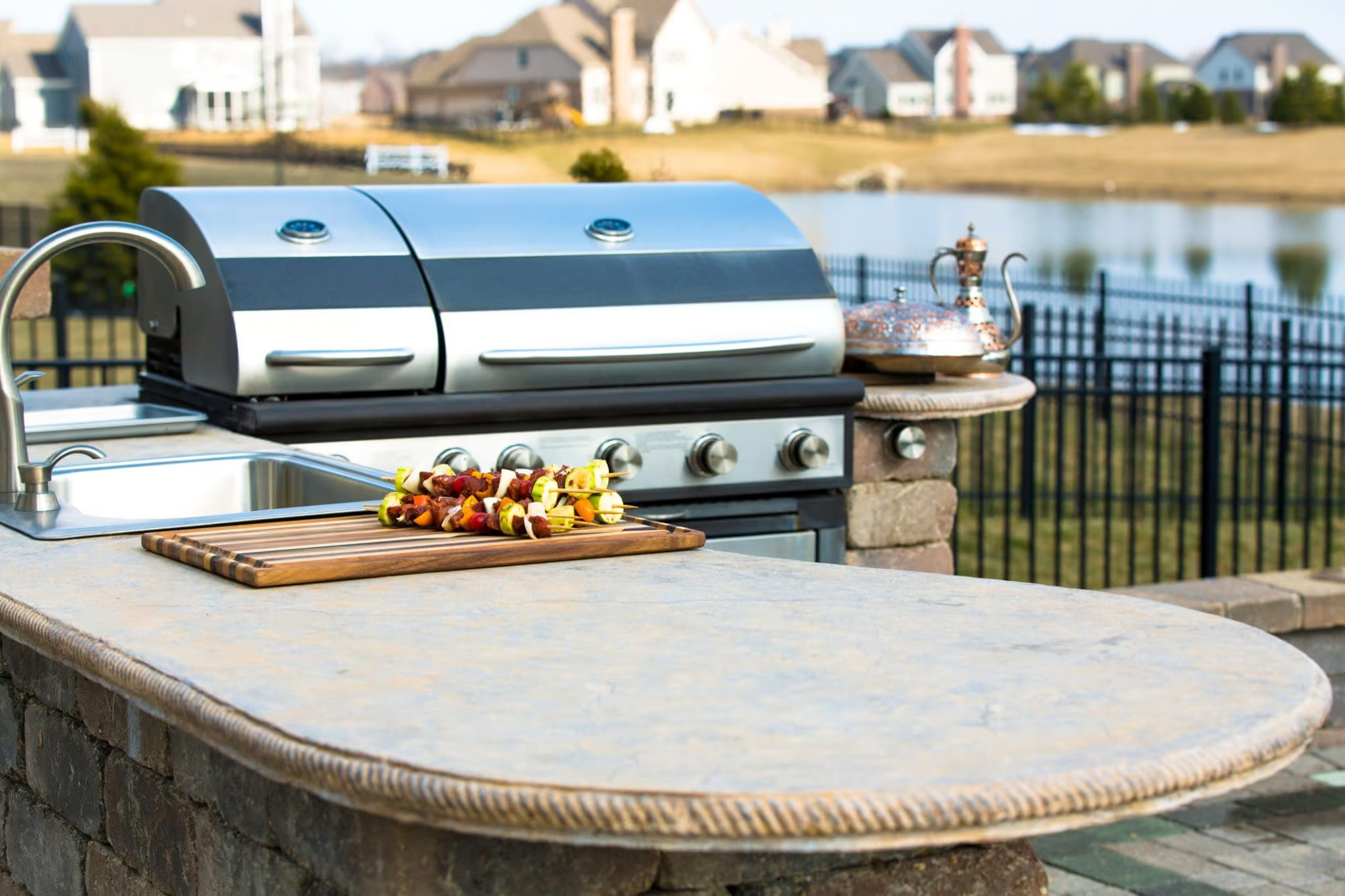
    When you’re creating an outdoor kitchen, there’s a lot to contend with — high cooking temperatures, weather considerations, design options, and much more. Luckily, there’s one material that checks all the boxes: concrete! Read on to learn why concrete is a fantastic option for show-stopping outdoor kitchens.

    Why should you install an outdoor kitchen?

    In recent years, the concept of creating outdoor living areas has exploded in popularity. So much more than a simple porch, homeowners are increasingly looking to use their outdoor spaces for year-round entertaining, cooking, and simple enjoyment. This is where an outdoor kitchen comes into play, as it’s often seen as a focal point for the entire home. It can be used for casual cook-outs, fancy parties, neighborhood entertaining, and, of course, easy family meals.

    Concrete outdoor kitchens are modern, durable, and customizable

    Concrete is the best material to use in an outdoor kitchen, thanks to its impressive qualities. Outdoor kitchens need to hold up to high cooking temperatures, sun, snow, and more. Concrete is not only durable but it’ll last for decades with minimal maintenance.

    Even better? Concrete provides a plethora of customization and flexibility. Concrete can be used throughout an outdoor kitchen, from the concrete floors to furniture to countertops to sinks! Let’s take a look at these elements in more detail:

    Concrete patios:

    A concrete patio can last 30 years if properly poured, sealed, and maintained. That’s a long life! By applying a sealer once every two years and giving it a good scrub every year, your concrete patio will look fantastic for years.

    Concrete furniture:

    It sounds surprising but concrete furniture is a great option for outdoor use. Majorly durable, this furniture is also perfect for those with allergies, as concrete doesn’t have issues with dust mites or mildew.

    Concrete sinks:

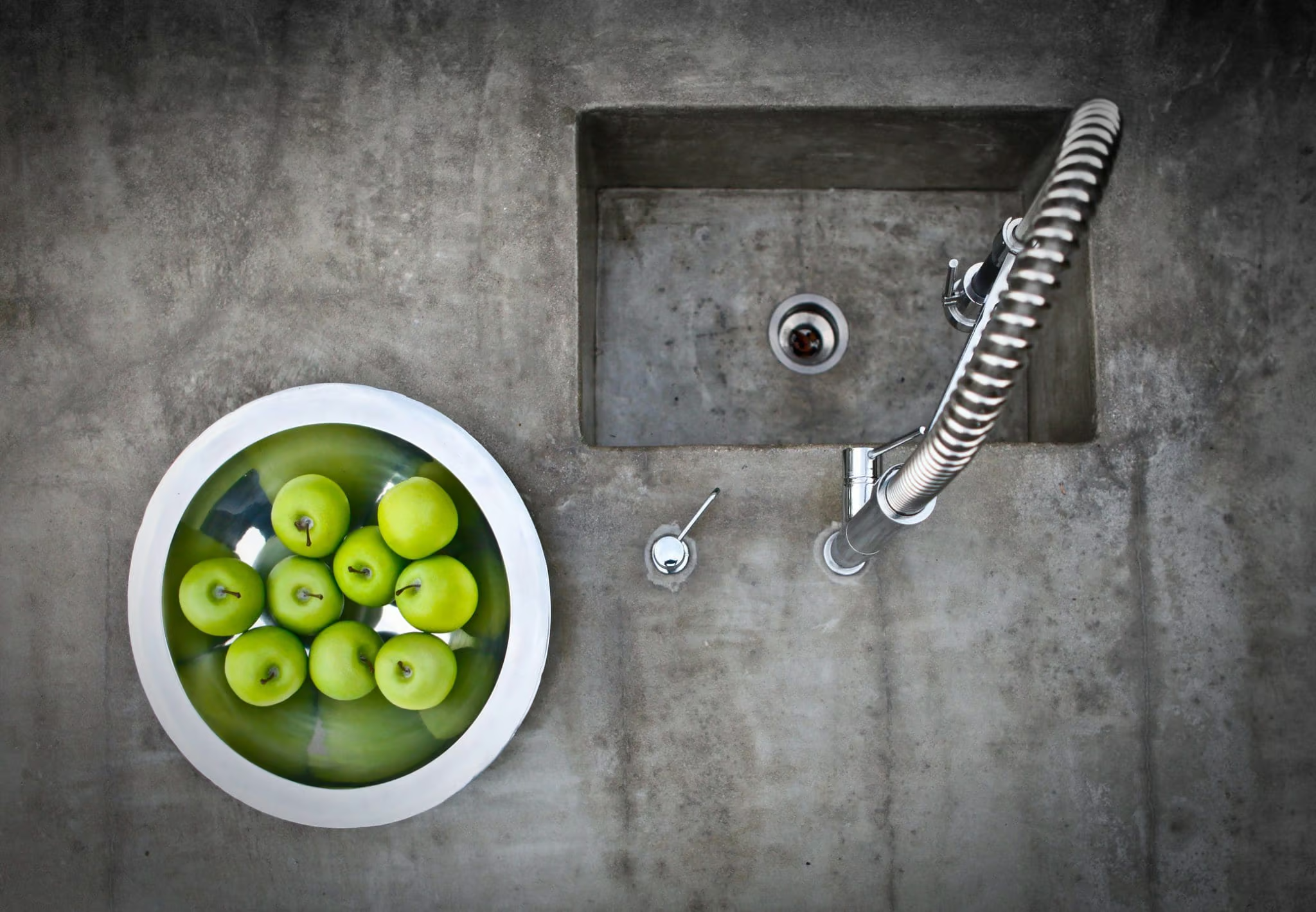
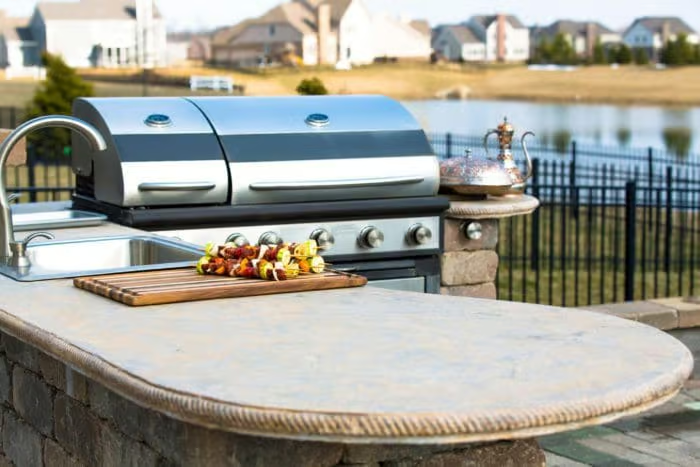
    Concrete is an excellent choice when you need unconventional dimensions for your sink or you want it integrated with the counter. In an outdoor kitchen, a small bar sink is a useful feature for your guests.

    Concrete countertops:

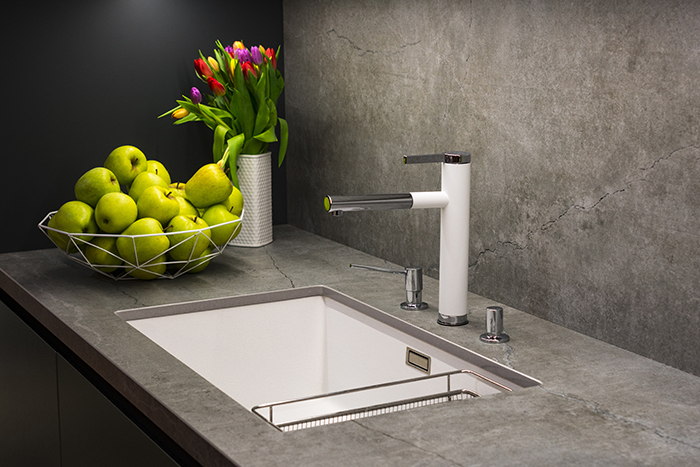
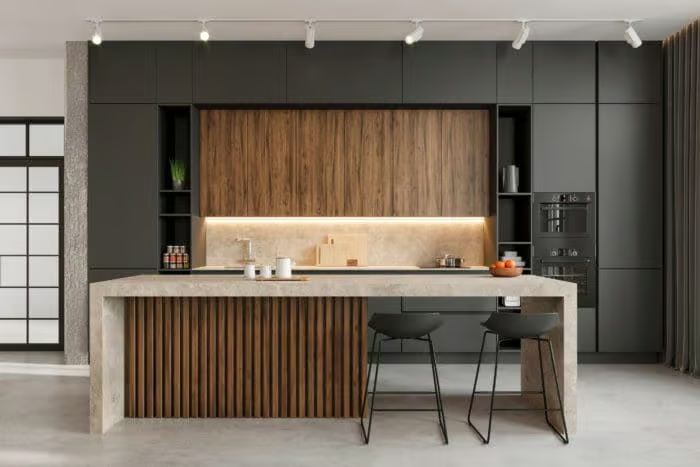
    We saved our favorite for last! Concrete countertops are incredible and can match any design due to the stamps and tinting options available (more on this below). They can be a work of art if the surface is polished or embedded with materials like glass. Easily cast trivets or cutting boards into the counter to further enhance its functionality. Since concrete is so strong, countertops can have overhangs or seamless sections. Lightweight edge liners complete the look. Our selection of Proline products transfer texture to edges, corners, and risers. Both flexible and reusable, these liners are available in many natural textures.

    Decorative concrete

    Concrete’s decorative options are one of its top features. Stamps provide the look of materials such as brick, wood, stone, and tile, while tinting and coloring products create a beautifully cohesive look. When working with existing concrete, color packs for cementitious overlays or ProStain are great options. Proline Color Hardener and Integral color are perfect on new concrete. Accent the project using color products like Antique Powder Release, EZ-Tique Antiquing Wash, or acrylic stains.

    Design considerations

    When planning an outdoor kitchen, you want to up the ante because a simple grill sitting on a concrete pad won’t wow the neighbors! Design to impress by incorporating these factors into the plan.

    1. Protection from the elements:

    Think about sun, shade, rain, show, and wind. You’ll want an outdoor kitchen to be adequately protected from undesirable weather. Make sure the area will be comfortable not only during the summer, but during the off-season too. Incorporate awnings, trellises, and built-in umbrellas so homeowners can use the kitchen when it’s hot, raining, and maybe even snowing. Don’t forget to take advantage of natural shade provided by trees and vines to help cool off. Lastly, take the wind into account when deciding where the grill will go so smoke won’t blow into your dining area or into the neighbor’s windows.

    2. Size:

    To ensure the area is used often, it has to meet the needs of the homeowners and accommodate their most typical gatherings. Ask about the entertaining needs of the family, such as how many people they might entertain, how big their families are, what kind of parties they host, and if they commonly use caterers.

    3. Location:

    When situating the kitchen, ensure it’s placed in the best location. Take natural shade into account (see above!), as well as proximity to the inside kitchen for max convenience. Consider the importance of accessibility, like minimizing steps or including ramps.

    4. Equipment:

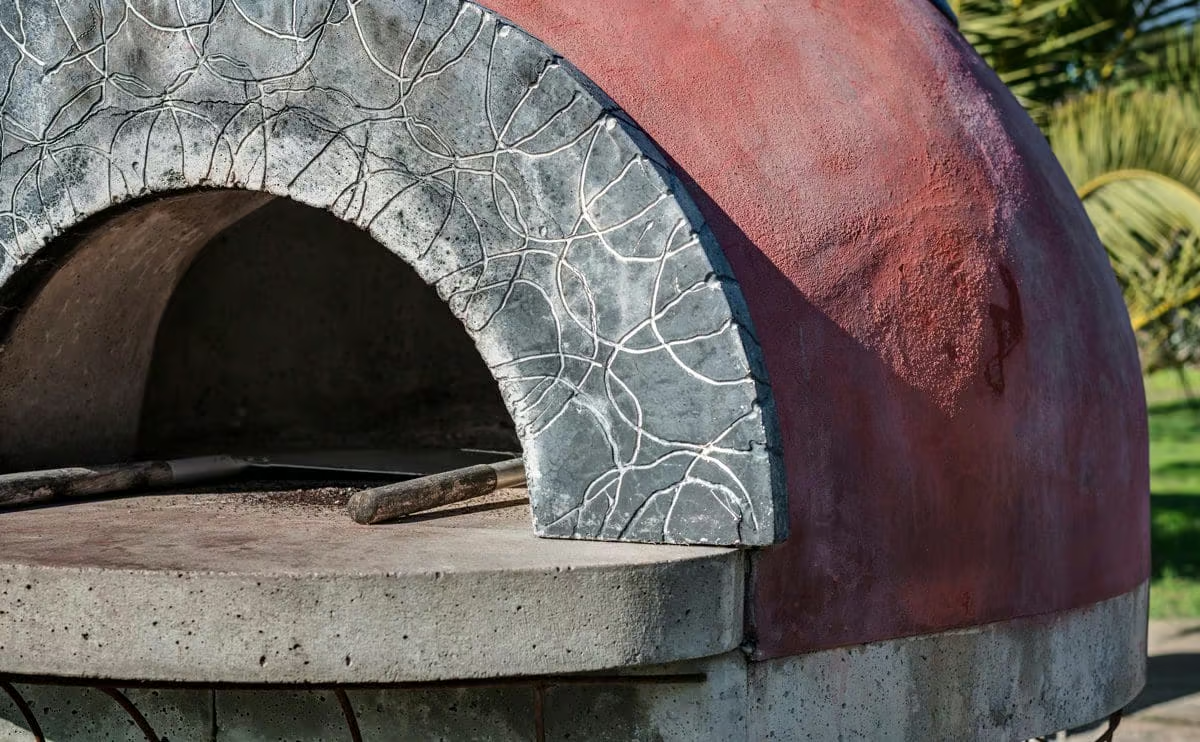
    Don’t settle for just a grill in an outdoor kitchen. Take into account the wide variety of options available, including outdoor refrigerators, bar sinks, side burners, and built-in storage. (We love pizza ovens, too!)

    Ready to get started?

    Contact our friendly experts today at 800-221-9469 if you need assistance. We’re here to answer your project and product questions! If you’re ready to get started on an outdoor kitchen, start shopping our selection of Proline concrete stamps. To learn more, read Tips to Create the Perfect Outdoor Living Space and Four Trends for Outdoor Kitchens.

  • Concrete Furniture and More

    Concrete furniture?! Yep, you heard us right. Concrete is an incredible material that can be used to create beautiful tables, sinks, bookcases, and more. While most people think of concrete as a basic material for driveways and foundations, those of us in the know understand how perfect concrete is for crafting unique yet utilitarian furniture and household pieces.

    What can you make with concrete?

    Today, a more accurate question is what can’t you make with concrete? Concrete can be used to make so many durable objects. Let’s take a peek at some of our top ways to use concrete!

    Concrete fire pits and tables

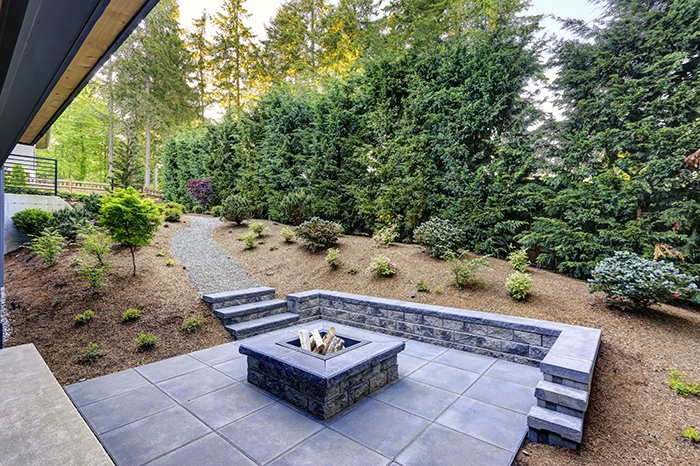
    A concrete fire pit or fire table is one of our favorite ways to enhance an outdoor area. Homeowners love making the focus on their outdoor entertaining a fire pit or table, which is perfect for larger gatherings or a simple family night. Thanks to stamping and tinting options, a concrete fire pit can resemble more traditional materials and beautiful meld with any home style.

    Concrete is a great option for fire pits since it’s unaffected by varied weather conditions, pests, or UV rays. Plus, concrete fire pits are low maintenance, requiring a simple soap and water cleaning periodically, if that! Many homeowners find that they don’t need to clean their concrete fire pits at all.

    Use Proline’s Form and Edge Liners to make a custom fire pit or fire table for years of entertaining fun!

    Concrete furniture

    Concrete furniture is one of the most surprisingly elegant ways to use concrete. Consider benches, patio sets, interior/exterior tables, or side tables. Concrete’s durability is a major factor in its appeal. Concrete can withstand hundreds of pounds of weight, as well as extreme heat and cold. Plus, it’ll never warp.

    Although concrete can develop minor cracks, they can be repaired. Cracks can be filled in with matching cement and a fresh coat of stain will refresh the look of the piece. Alternatively, minor cracks can be embraced with the viewpoint that they can enhance the natural beauty of the furniture!

    With no off gassing, concrete is non-toxic and, with proper sealing, food safe too. Concrete is a great option for those with allergies, as it doesn’t permit the proliferation of mold, mildew, and dust mites.

    Lastly, if you think concrete furniture is going to be heavy, then think again! Thanks to techniques like glass fiber reinforced concrete and hollow concrete, concrete furniture can be lighter than conventional materials but much stronger.

    Concrete sinks

    Concrete sinks are popular for their ability to compliment nearly any décor and style, as well as conform to just about any shape! No matter if you need a square, round, or rectangular shape, concrete is your go-to, especially if your sink has unconventional dimensions. Concrete works well for a traditional vanity as well as an elegant vessel sink. Concrete sinks are also a fantastic option if you’re installing a concrete countertop, too. This way, the countertop can meld seamlessly into the sink for a unified aesthetic.

    Consider concrete sinks for both residential and commercial bathrooms or kitchens. They can be crafted in whatever dimensions are desired, whether that’s a deep trough sink or a double sink. Due to the vast options available with tinting and finishing, concrete can match nearly any look, from modern industrial to rustic farmhouse.

    Concrete sinks must be sealed periodically in order to prevent staining and keep it in great condition. If minor damage occurs, it can generally be patched and resealed.

    Why concrete?

    Concrete is perfect for these less-conventional uses for the same reasons concrete is perfect for patios, walkways, and driveways!

    Benefits of concrete

    • Lasts for decades
    • Low maintenance
    • Lower life cycle cost
    • Can be customized and designed

    Concrete’s durability

    Concrete can last for decades, especially if it’s properly installed and properly maintained. Although cracking and wearing can occur, most of this wear-and-tear can be patched and repaired.

    Concrete’s maintenance needs

    In general, concrete doesn’t need much in the way of maintenance. Regular cleaning with a mild detergent and stiff brush is usually sufficient. Depending on your concrete object, you might need to reapply sealers periodically to preserve colors and keep it looking great.

    Life cycle cost of concrete

    While the exact life cycle cost of concrete is dependent on what exactly the alternative is, in general, concrete wins out. It’s often more expensive up-front when compared to other materials but given concrete’s long life span and low maintenance needs, it ends up being the most cost-effective option.

    Decorative concrete

    Concrete really shines when it comes to decorative options and the ability to create fully customized pieces. While untextured concrete can work well for the options above, stamping concrete can make it mimic the look of brick, tile, stone, wood, and more.

    Concrete might be pale gray, but that tone can take on a natural beauty of its own when polished to a high sheen. Or, consider the rainbow of tinting and staining options available by using antiquing washes, stains, integral color, and color hardeners.

    To summarize:

    • Concrete is more durable.
    • Concrete has an average lifespan of 50 years.
    • The only maintenance required is applying sealer every few years.
    • Concrete can be stamped with patterns, textures, and designs
    • Concrete can be tinted and stained with different colors and finishes.

    Shop Calico Construction Products

    Shop our selection of concrete stamps, form and edge liners, colors, and sealers. Contact our specialists at 800-221-9469 to discuss your project and any questions you have. If you’re a homeowner and you need to find a contractor in your area to perform the work, we can help there too!

  • Basic But Not Boring: Concrete Walkways

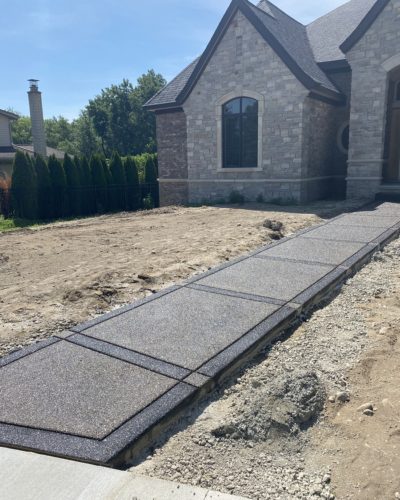
    A concrete sidewalk may not sound groundbreaking but don’t discount this functional element. If using concrete stamps and colors, a simple sidewalk or walkway can be transformed into a beautiful feature that perfectly accents a home or business. Let’s get inspired!

    Benefits of concrete walkways

    Many materials can be used to make attractive walkways, such as gravel, brick, pavers, and natural stone. While these materials have their own set of pros and cons, in our opinion, nothing beats concrete! This popular material is inexpensive and readily available and, of course, it’s extremely durable. While concrete can crack over time, its average lifetime is up to 30 years, especially if properly installed and maintained. Additionally, the ability to add decorative elements to concrete, through the use of stamps and tints, is an attractive prospect for homeowners looking for the ultimate in customization.

    A concrete sidewalk:

    • Lasts for decades
    • Is low maintenance
    • Has a lower life cycle cost
    • Can be customized and designed
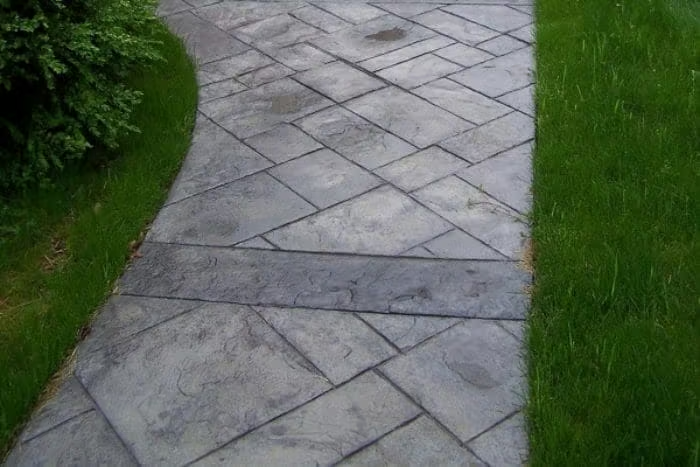
    Ashlar stamped concrete job by GLS Flatwork
    Ashlar stamped concrete job by GLS Flatwork

    How to create a decorative sidewalk

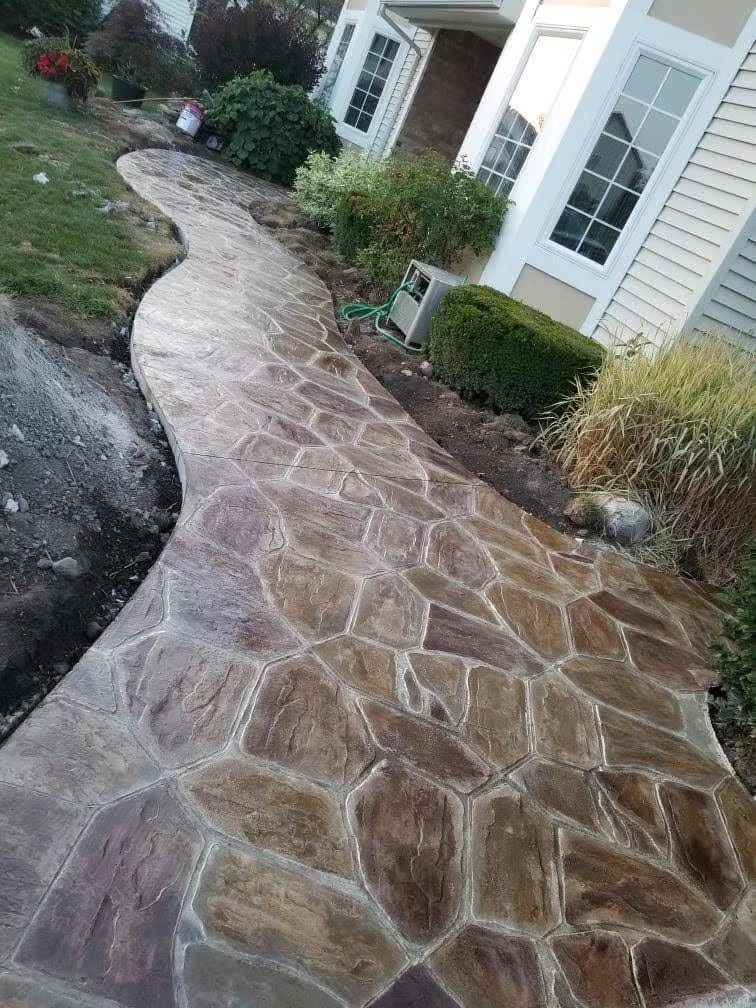
    Stamped concrete is a fantastic option that yields beautiful yet practical results. With nearly unlimited patterns and colors available, concrete stamps are an increasingly popular option. Decorative concrete can coordinate with any type of design style, whether it’s modern, rustic, industrial, or coastal. With careful color application and the use of patterns such as reclaimed wood, brick, flagstone, and slate, a concrete walkway can replicate the look of many other materials. Plus, the addition of edging, borders, medallions, and accents can take any walkway from boring to a showstopper.

    We’re proud to carry high-quality products by Proline:

    Seamless Magnetic Pattern Concrete Stamps: The magnets on the stamps link up the tools to perfectly align the grout lines. No repeat patterns, just rotate and lock in place! Lighter weight results in less user fatigue with increased coverage and no joint touch up or squeeze out. Read Proline Magnetic Skins Are a Game Changer!

    Super Skins: These virtually indestructible stamps have fiber reinforced composite construction and a limited lifetime warranty. At half the weight of traditional skins, they’re twice as stiff. Learn more about Super Skins!

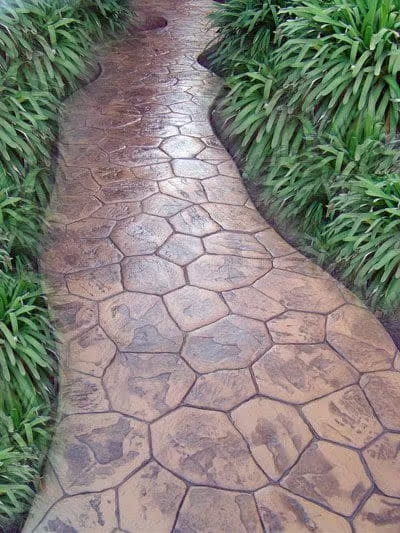
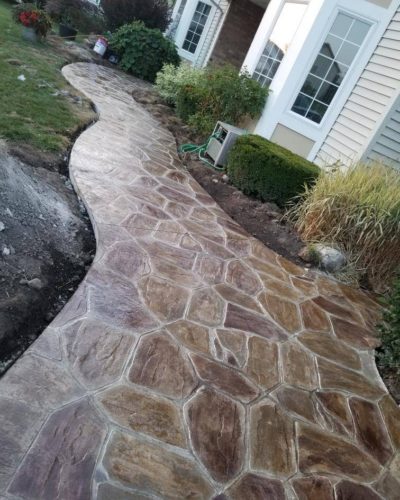
    Random Stone stamped concrete path by Outback Concrete
    Random Stone stamped concrete job by Outback Concrete

    Color and tints

    Grey concrete is a thing of the past! There are practically endless options when it comes to tinting, staining, and texturing, especially when you include the products that can be mixed and matched. Whether you’re looking for bright statement colors or muted earth tones, there are tons of fantastic possibilities.

    Use Proline Color Hardener or Integral Color for base color on new concrete and color packs for cementitious overlays or ProStain to brighten up existing concrete. Products like water-based acrylic stain, EZ-Tique Antiquing Wash, and Antique Release can be used to accent.

    Concrete walkway maintenance

    A concrete walkway is fairly low maintenance. Frequent sweeping will help dirt and grime from building up, and a good scrubbing once or twice a year will keep it looking great. Consider applying sealer every few years to preserve the concrete, intensify the colors, and make it easier to clean. Sealers can prevent also damage from freeze-thaw cycles.

    Find your inspiration!

    Silversmith Concrete Project
    Decorative concrete walkway created with Proline touch up wheels – EZ-Tique Antiquing Wash – Powdered Antique Release – Silversmith Concrete in Western NY
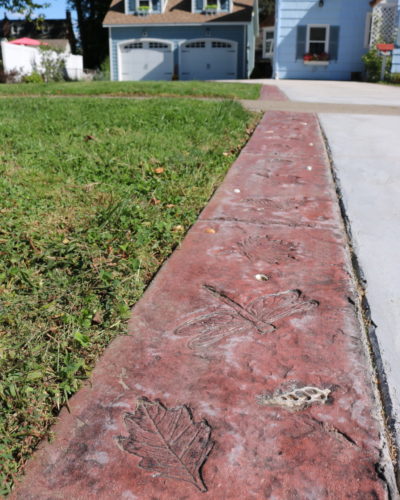
    This homeowner used Proline Antique Release and Garden Series stamps to create this lovely border. And note the embedded shell!
    This homeowner used Proline Antique Release and Garden Series stamps to create this lovely border. And note the embedded shell!
    Motor City Stamped Concrete: Integral Color – Powdered Antique Release – Acid Stain
    Motor City Stamped Concrete: Integral Color – Powdered Antique Release – Acid Stain

    Get started on your decorative concrete walkway!

    Contact the concrete experts at Calico Construction Products. Shop our wide selection of concrete stamps, coloring options, and accessories. We’re standing by to answer your questions! Just give us a call at 800-221-9469.

  • Wood Stamped Concrete – Beautiful and Durable

    Everyone loves the look of a beautiful hardwood floor. What can be more Pinterest-worthy? However, true hardwood floors are costly and require some significant maintenance. Even durable wood flooring can be susceptible to water damage and the scratches that come with normal wear and tear. Other faux wood options, like laminate and tile, offer varying degrees of durability and cost depending on materials and brand.

    One of our favorite lines of Proline concrete stamps is the wood planks. These diverse stamps give your floor or patio the look and color of wood with the great benefits of concrete. Not sure if they’re right for your project? Read on to learn more about these incredible tools!

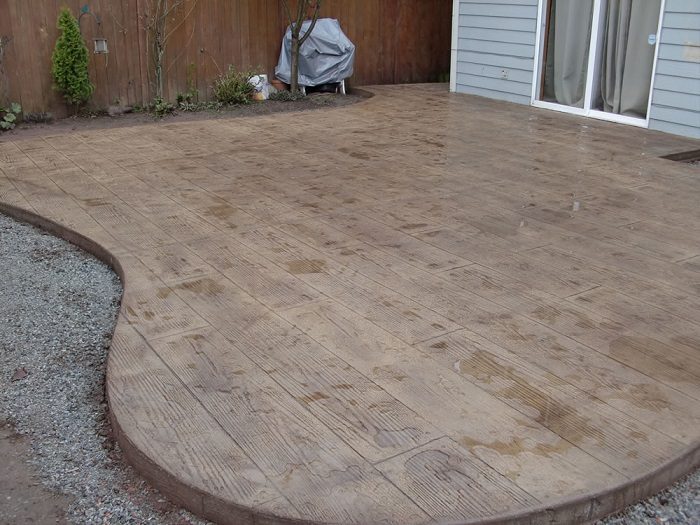
    Wood Plank Concrete Stamped Deck

    Types of wood concrete stamps

    Calico Construction Products offers Proline’s full line of wood plank concrete stamps. Thanks to our variety of stamps and color options, you can create a look that mimics classic wood, weathered wood, and more.

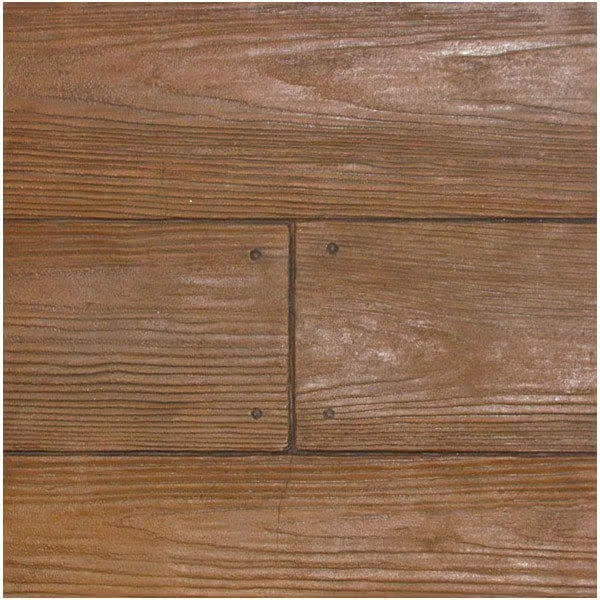
    • Boardwalk: Highly life-like, right down to the pegs in the planks. Each plank is 12″ wide and comes in 4′, 6′ & 8′ lengths.
    • End Grain 6″ Post: This truly unique pattern replicates the ends of 6″ x 6″ posts. Each square has a circular wood grain, giving it the look of real wood posts.
    • Hand Hewn Timber Plank: Go for the rustic look with these stamps that provide a realistic hand-cut look. Available in 16” planks.
    • Parquet Wood: Replicate the look of parquet (small blocks of wood laid in a regular pattern) with concrete! In diagonal 6″ planks and straight 8” planks.
    • Random Boardwalk Wood Plank with Knots: A lifelike option, down to the knots. Available in 6” and 8” plank
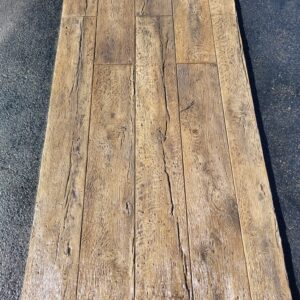
    • Reclaimed Timber Plank: Reclaimed lumber is extremely popular yet often expensive. Concrete will get you the same look but with so many benefits! Available in 8”, 12”, and 16” planks.

    NEW Reclaimed Timber

    The Reclaimed Timber Plank is by far the most popular in the wood plank concrete stamp offering. So much so, Proline introduced the first stamp in their innovative new line of Super Stamps in the 10” Reclaimed Timber. This Reclaimed Timber 10″ Gang Tool is a fraction of the weight of traditional large tools. Double the stiffness and composite construction make the SUPER SERIES virtually indestructible. Check out the NEW S-BWR270 SET or the individual pieces.

    Where to use wood concrete texture stamps

    Concrete stamps are a smart way to transform patios and interior floors. Get the look of real wood with the durability and easy maintenance of concrete. Plus, thanks to the endless color options, concrete can accentuate and enhance any design aesthetic.

    • Wood stamped concrete patios: Transform a plain concrete patio into a look-alike deck. A wood stamped patio has the rustic look of wood, including realistic grain patterns and textures!
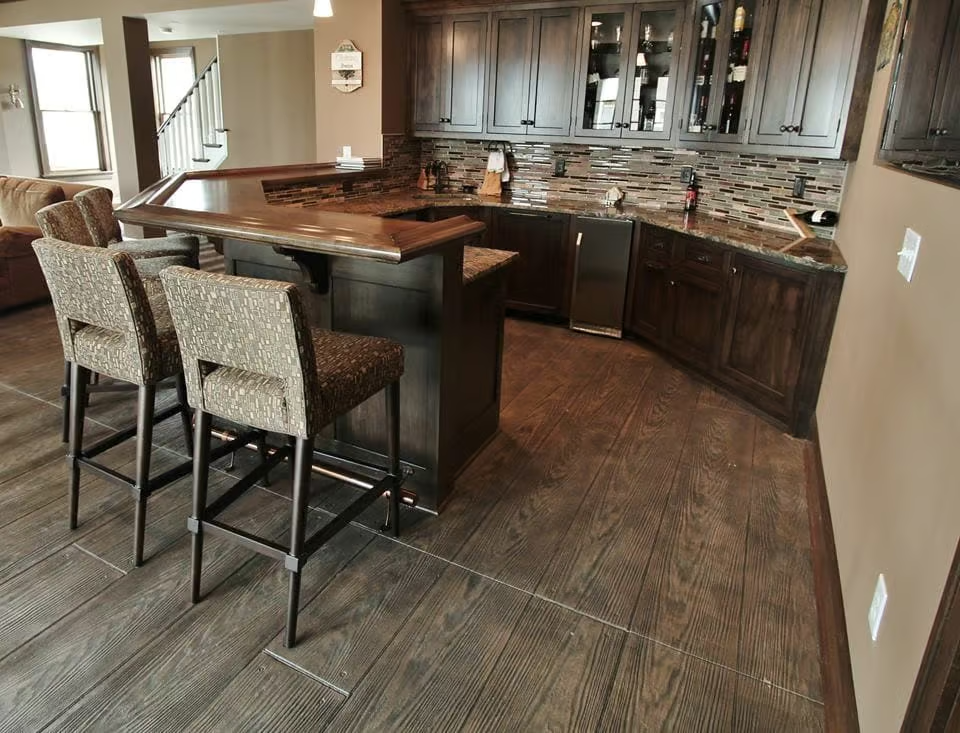
    • Wood stamped concrete floors: Concrete floors are a great option for high traffic areas, both in businesses and in homes. Thanks to concrete’s durability, easy maintenance, and color options, this is an increasingly popular flooring option.
    • Wood stamped concrete pool decks: To create a warm, inviting pool area, use wood stamps on a concrete pool deck. A real wood pool deck looks beautiful but it’s not so practical. Wood gets damaged by moisture and chemicals. Plus, you don’t want slivers in bare feet! Wood stamps mimic the beautiful look but with a fraction of the maintenance.

    How to really enhance your wood-stamped concrete

    First off, if you’re going for a real-wood look, then you’ve got to incorporate the right colors. Luckily, this is a breeze with concrete. Try Water-Based Acrylic Stains in browns, blacks, reds, and grays, depending on the type of wood you’re imitating. Consider different finish techniques such as rolling, sponging, and brushing. Water, when sprayed on during application, can blend and soften the colors.

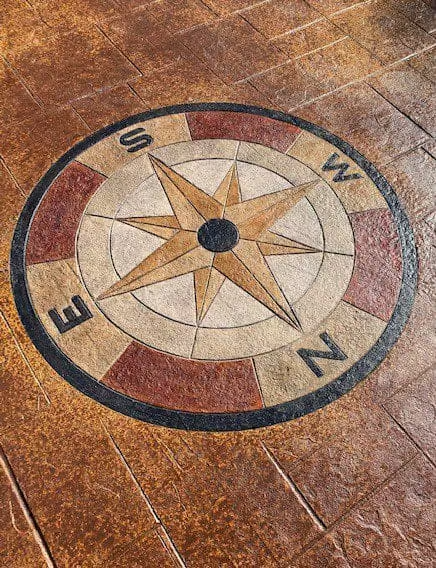
    Secondly, consider border art or decorative accents that will tie the look together. Personalize the area with rustic or classic embellishments or consider a statement piece like a medallion or compass rose.

    Wood Plank Concrete Stamped Kitchen Floor

    Benefits of concrete

    There are so many benefits to concrete!

    #1) Durability is a major benefit. Concrete is so hard and strong that it’s not easily damaged. It can handle pets, messes, heavy furniture, and dropped items. When properly installed, concrete lasts for years.

    #2) Concrete is also easy to maintain. When sealed correctly, concrete requires a sweeping and damp mopping to get clean. While cracks can occur over time, they’re often easy to fix with a simple patch kit.

    #3) The ability to add radiant heat is another attractive benefit of concrete, especially for interior floors.

    #4) Concrete is less expensive than hardwood and labor is usually cheaper too.

    #5) Concrete is highly customizable when stains, tints, and other decorative features are used.

    Shop wood stamps at Calico Construction Products

    We have all the supplies you need for your faux wood concrete project. We take pride in helping our customers create fantastic concrete surfaces with our expertise and attention to detail. Browse our online store and contact us at 800-221-9469 if you have any questions!

  • The Beauty of Concrete Countertops

    Does the idea of a concrete countertop seem a little boring or cold? Think again! Thanks to the incredible customization options of concrete, a concrete countertop can be a beautiful, warm feature that is both functional and design-forward. Learn about the pros and cons of concrete and decide if they’re right for your project!

    Benefits of concrete countertops

    Concrete countertops are a great option for commercial spaces, like bars and restaurants, but they also work well in homes. Whether kitchens, backyard patios, or even bathrooms, concrete counters are a beautiful addition.

    Pro: Completely customizable

    This is definitely the biggest perk to a concrete counter! Thanks to the available textures and finishes, your countertop can match literally any design style, whether you want a rustic look, a modern look, or something in-between. Thanks to stamps and an array of tinting options, your concrete can mimic tile, wood, marble, granite, and more! Plus, consider polishing the surface or embedding stone or decorative glass for a truly one-of-a-kind piece. Thanks to the handmade nature of a concrete countertop, it’s also easy to cast useful features like trivets or cutting boards.

    Pro: Durable

    Durability is another major benefit when it comes to concrete countertops. Not only is concrete inherently durable, but countertop concrete mixes usually contain glass fibers too, which enhances the overall strength. This mix means that both overhangs and seamless sections are no problem. When properly sealed and maintained, a concrete countertop can last 50 years!

    Drawbacks to concrete countertops

    Concrete has a few drawbacks, too, although we tend to think the pros outweigh any cons!

    Con: Staining

    Concrete countertops are susceptible to some staining. And since these countertops last so long, you’ll want to make sure you’re prepared to mitigate any stain damage. Regular applications of sealer and wax will help protect the surface. Any spills need to be taken care of immediately – don’t let liquid sit on the surface. But personally? We love not having to clean grout lines!

    Possible cons: Time and cost

    Comparing the time and money it takes to install a concrete countertop versus a more conventional material is tricky. In general, it used to be that concrete counters took longer to install due to their handcrafted and custom nature. (Plus, concrete needs to cure!) The cost also tended to be higher due to the labor. But in 2022, much of this conventional wisdom has been thrown out the window thanks to high demand, labor shortages, and material shortages. To best compare these factors, you’ll probably need to get some real-life quotes. The situation is so dynamic that it’s hard to estimate.

    Is a concrete countertop right for your project?

    Weighing the pros and cons is very much up to the specifics of the project. However, we tend to think that concrete’s 50-year lifespan and vast customization options outweigh any cons. (We love concrete, though, so we may be biased!) Our overall opinion tends to be that concrete is a good fit if you have a unique counter setup, you want all the bells and whistles, and you love to make a statement!

    How is a concrete countertop installed?

    It sounds like a major job if you don’t know how concrete is installed, but a professional will make it look easy. Countertops can either be poured in place or precast.

    A precast involves building a mold, pouring the concrete, letting it cure, and then installing it in place. This method can work for certain projects and it provides many customization options, especially when it comes to embedding cool materials. However, it’s difficult to use edge molds and creating holes for sinks or faucets can get confusing. Not to mention that moving the finished piece into place is a significant undertaking.

    Pouring in place is a popular option that many contractors find to be easier. It consists of covering the existing cabinets with plywood and building a form around the edges. Concrete is poured into the form and, once fully dry, the form is removed to reveal the new counter. This method works extremely well for including fancy edge molds and it also removes the necessity of moving a very large and heavy piece of concrete through your home.

    How should you maintain your concrete countertop?

    To keep your counter looking great for decades, it’s usually recommended to take a few steps.

    • Apply a food-safe wax if your counter will be used as a food prep area.
    • Reseal your counter once a year to prevent stains and water absorption.
    • Wipe up spilled liquids immediately.
    • Clean the counter with a mixture of dish soap and water.
    • Don’t use any abrasive cleaners.
    • Use trivets for hot pans since they can damage the sealer.

    Contact Calico Construction Products

    Ready to get started on a concrete countertop project? Contact Calico at 800-221-9469 if you want to chat. Our concrete pros are happy to talk through any problems or questions you have. Or if you’re ready to get shopping, shop our selection of concrete stamps, form and edge liners, colors, and sealers.

  • Enter Our 2021 Photo Contest!

    Have you completed a stamped concrete project recently? Do you love what you created? Enter our photo contest for the chance to win a $150 gift card to Calico Construction Products. Three winners will be chosen! Bask in recognition and accolades from your peers while getting a little extra love on your website and social media (thanks to our links and callouts!).
    How to enter our contest

    It’s so easy to enter. Just upload your photo(s) to our online form, enter some basic info, and submit! If you have specific details about the products and methods used on your project, we’d love to know that, too. Any information you share will help inform and educate other contractors and homeowners about the incredible possibilities of stamped concrete. Show the world what you can do with Proline Concrete Tools!

    What can you win?

    THREE winners will each receive a $150 gift certificate to our online store. It’s a great opportunity to buy a new concrete stamp or try out new concrete stains. Plus, we’ll feature all entries on our social media and our website. We’ll link to your site and your social media profiles, too, providing you with valuable exposure.

    Ready to start?

    Just click here to enter. You have until 09/30/2021 to enter. Winners will be announced 10/12/21. Read contest rules here.

  • Four Trends for Outdoor Kitchen Spaces

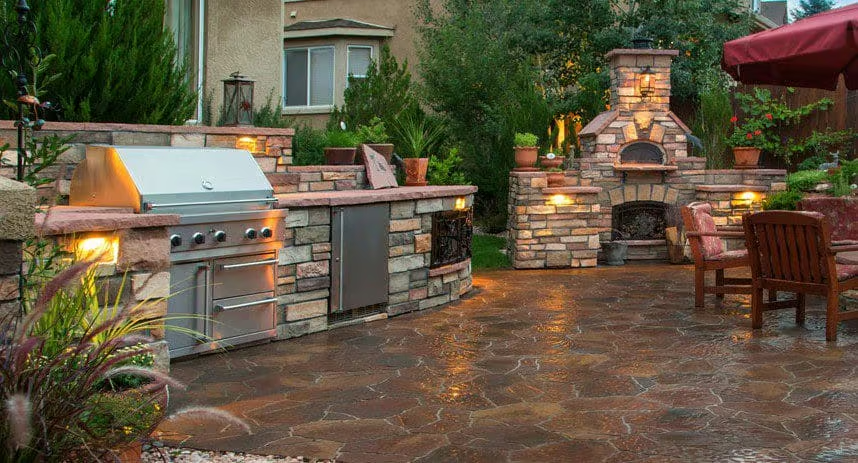
    Stamped Concrete Patio with Outdoor Kitchen, Fireplace, and SeatingSpring is in the air and our thoughts are turning to beautiful and functional outdoor kitchens. While most of us already have a backyard grill, there are many ways to enhance your outdoor spaces no matter your budget or climate. Let’s take a look at some of the top trends in outdoor kitchens!

    Trend #1: Go beyond the slab

    fenced-in wood plank stamped patio with grill and seating
    Looks like wood…without the trees!

    We’ve all seen patios consisting of a sad little square of grey concrete. Concrete is durable, cost-effective, and low maintenance. However, with so many tinting and stamping options available, concrete can be versatile and beautiful! Don’t settle for a boring slab. Proline’s concrete stamps will meet any design needs, whether you want the look of brick, reclaimed wood planks, stone, or slate. (Contractors will especially love Proline’s Seamless Magnetic Pattern Concrete Sets, which are lighter than traditional skins but twice as rigid and practically indestructible.)

    And what about color? Concrete can shine thanks to acid stains, color hardener, antiquing wash, and acrylic stains in any color and combination you could want. There are a variety of methods that professionals use for tinting concrete. Ask your contractor about the optimal method for your particular project, climate, and usage.

    concrete patio walls

    Trend #2: Concrete patio edging

    A patio needs edging to define the space and keep grass at bay. Concrete edging is popular because not only does it give you a clean look, but it’s durable and easily cleaned. Consider adding in planters, flowerbeds, or even low walls to help define your patio. For a utilitarian option, concrete countertops can be incorporated into the edging to give your patio a seamless, custom look with plenty of workspace.

    Trend #3: Amp up the grilling situation

    A simple gas or charcoal grill can get the job done but today there are so many luxury-style grills available at affordable prices. Why not upgrade? If you walk into any big box home improvement store, you’ll find a wide variety of options that offer flexibility and quality.  Thanks to the proliferation of add-on features, such as side burners, variable temperature control, warming racks, and even searing grills, you can find exactly what you want. Hybrid grills even give users the option to switch between charcoal and gas. Once you have your grill, think about other types of cooking options you might enjoy, like a smoker, open-flame cooking, or even a pizza oven. If your budget is on the high end, outdoor sinks, wine coolers, refrigerators, and more are becoming increasingly popular.

    Trend #4: Cover it up

    To ensure your area can be used no matter the season, consider partially enclosing your patio to protect it from heat and rain. A closed-roof awning can be as simple or as complex as you like, while protecting your valuable furniture and appliances. From metal, glass, or plexiglass canopies, to a variety of wood options, a roof over your patio is a great way to enjoy the outdoors in comfort. If you don’t mind being exposed to the elements, options like fabric covers, vine-covered lattices, or exposed beams can provide shade with max style.

    To find more incredible concrete ideas, visit our idea gallery!


  • 5 Ways to Make Your Project a Work of Art

    Your concrete project is planned out and you know your client is going to love it. Here are a few quick tips to help turn your project into a work of art.

    Tip #1: Use Proline SUPER Skins

    You’re already a pro at concrete stamping but make sure you’re using tools that will make your job as easy as possible. Proline’s Seamless Magnetic Pattern Concrete Stamps are the best way to make your vision a reality. These lightweight but rigid stamps have self-aligning patterns, thanks to strong magnets that line up joints. They can also rotate 90 or 180 degrees to create different looks. Requiring zero or very little touch up, they’ll cut your labor costs significantly. For more, read Proline Magnetic Skins Are a Game Changer.

    Tip #2: Try an Accent Piece

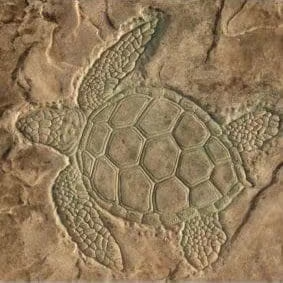
    Consider adding one or two seamless accent pieces to your project. A well-place landscape stamp, spiral sun stamp, or animal stamp is a great way to add flair and personality. Or, consider a selection from our wide assortment of hand sculpted accent pieces. Choose from our aquatic, equestrian, garden, and wildlife themes.

    Tip #3: Define the Space

    Borders are perfect for physically defining a project while adding a little something special to the overall look. Define the outline of a patio or add emphasis to landscaping. Shop our selection of animal, garden, and decorative borders.

    Tip #4: Use a Medallion Stamp

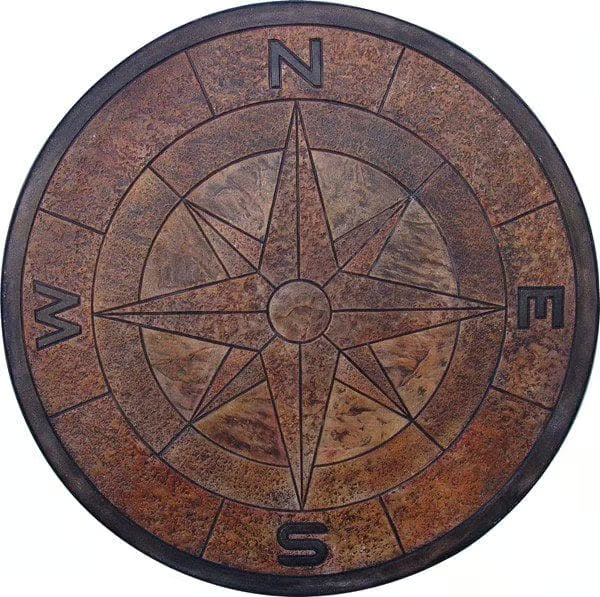
    Talk about a show-stopper! Medallion stamps are a classic and gorgeous method for adding a special style to your project. They’re a perfect way to add visual impact to a driveway or patio. From the classic compass rose to suns to lotus flowers, you’ll find a stamp for every client.

    Tip #5: Don’t Forget the Color!

    Concrete used to have a reputation for being drab but we know that’s anything but true! With the wide range of concrete color and tinting options available, there’s no excuse for a boring grey patio or driveway. From soft browns and blues to brick reds to bright turquoise, your options are endless! Get your base color with Proline Color Hardener or Integral Color for new concrete, Color packs for cementitious overlays or ProStain to brighten up your existing concrete.  Accent with color options including water-based acrylic stain, EZ-Tique Antiquing Wash, Antique Powder Release and more, you’re sure to find the right product combination for the job.

    Ready to make your project a work of art?

    Contact the concrete experts at Calico Construction Products. Shop our wide selection of concrete stamps, coloring options, and accessories. We’re standing by to answer your questions! Just give us a call at 800-221-9469.