• Ideas for Adding Plants to Your Decorative Concrete Project

    Ready to bring a little life to your hardscape? Incorporating plants into outdoor spaces that feature decorative concrete can add vibrant appeal. Depending on the project, there are a variety of ways in which adding plants can bring a splash of color, natural textures, and dynamic contrast to a home’s exterior. However, it’s important to be thoughtful and deliberate when adding plants so you can maximize their natural effects and ensure they’ll thrive in their environment.

    Read on to discover the basics of integrating plants with concrete, design principles to consider, methods of making concrete look more natural, maintenance tips for your project, and some tips for getting your project started.

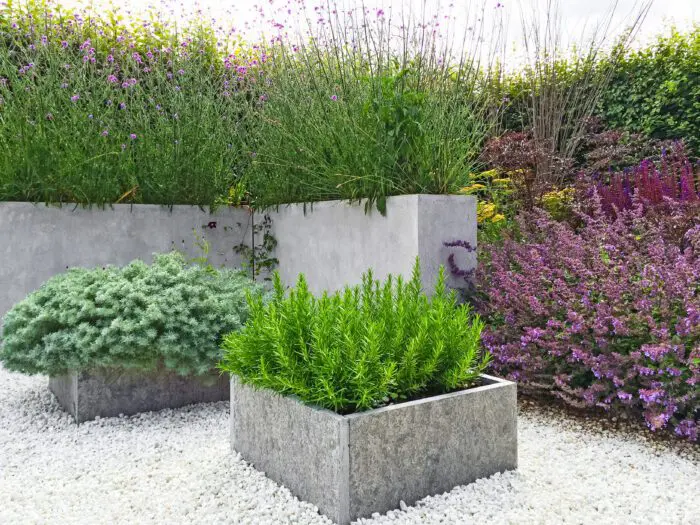
    Beautiful garden with concrete planters.

    Design strategies for integrating plants with decorative concrete

    While there are plenty of ways to incorporate plants with concrete, sticking to simple methods that require little upkeep is the best place to start.

    Although some concepts should be considered before concrete is laid, adding plants to existing concrete spaces is possible. We recommend researching which plants do best in your environment and whether they can thrive in your design. With just a little planning, you can save time and money down the road.

    Vertical gardening

    If you have limited space to work with or want to use a large variety of plants, a vertical garden on a concrete wall is a great option. This approach maximizes garden space and adds a lush green backdrop that enhances the aesthetic appeal of stark concrete surfaces. Techniques such as installing modular planters, using trellises, or incorporating felt planting systems can transform plain walls into vibrant living art pieces. Vertical gardens can then be complimented with wall fountains or concrete stamps that feature organic material.

    Built-in planters

    Integrating built-in planters into concrete structures such as patios, stairs, and walls is a sleek way to infuse greenery while maintaining a modern design aesthetic. These planters can be designed to fit into the features so they blend well while providing growing spaces. For example, embedding planters along the edges of concrete patios or using the risers of staircases for small herb or flower gardens can save space and add a unique element of nature. Built-in planters can also help manage drainage and protect structural integrity by controlling where water accumulates and flows.

    Between steps and along walkways

    Incorporating walkable plants between paver stones enhances the aesthetic appeal of walkways by introducing a burst of nature into hard landscaped areas. Plants like creeping thyme, moss, and sedum are popular for their resilience to foot traffic and ability to thrive in limited soil space. These plants soften the rigid lines of pavers, adding a lush, green element that can also reduce heat reflected off the stones while deterring weeds from growing. Such plants are also excellent for lining always or other concrete areas that may experience foot traffic.

    Design principles for integrating concrete and plants

    Not all design concepts need to involve plating plants into concrete structures. Simply adding plants around concrete surfaces can create plenty of aesthetic appeal.

    Mixing concrete and plants in your garden is all about finding the right balance and adding a splash of contrast to spice things up. Think of it like a dance between the heavy, steadfast nature of concrete and the soft, whimsical qualities of plants. You can achieve balance by placing lighter, airy plants like ornamental grasses or delicate ferns beside your sturdy concrete elements. This approach softens the hard edges and heavy concrete feel, creating a well-thought-out and harmonious garden.

    For a bit of contrast, try pairing bold, vibrant plants against the neutral concrete backdrop. Imagine bright green hostas or colorful annuals popping against a sleek gray concrete walkway. It’s all about making those plants stand out and giving your eyes something exciting to latch onto. And don’t forget texture! Mixing smooth concrete with rough, chunky succulents or bushy shrubs adds a tactile dimension that makes a space come alive.

    Using shapes wisely can also elevate your garden’s design. Square concrete planters or rectangular stepping stones provide a crisp, structured look that contrasts wonderfully with the wild, free forms of plant life.

    Methods for making concrete look more natural

    While plain slate concrete can create appealing contrasts with plants, creating a more natural look with concrete provides a much more harmonious look and feel.

    Add color to your decorative concrete to mirror nature

    Concrete stain is an excellent tool for designers and homeowners looking to match or complement the natural surroundings. Unlike paints, stains penetrate the concrete surface, offering more durable and permanent coloration that doesn’t wear off over time. Concrete colors come in various earth tones and vibrant colors and can be applied in different ways, allowing for complete customization.

    You can choose shades that mimic the dark browns of soil, the sandy tans of beaches, or the subtle grays of natural stone. These stains can be applied uniformly for a consistent color across the surface or varied to create natural color fluctuations that you would see in stone or wood. This variability can be enhanced by applying different colors in layers, achieving a depth of color that resembles natural materials more closely.

    Patterns: stamping and shaping concrete with natural textures

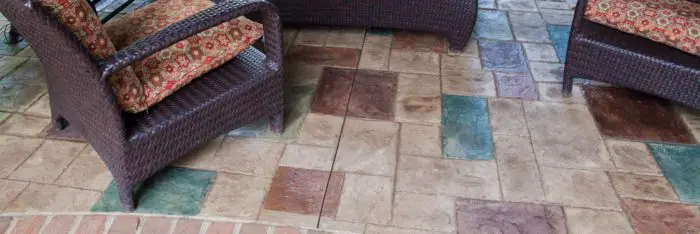
    Patterns in concrete can be applied through stamping, a technique where mats or stamps embossed with specific textures are pressed into the concrete before it fully sets. These stamps are often shaped like natural materials such as stone, brick, or wood, giving the hardened concrete the appearance of these textures.

    Stamped concrete can provide natural appearances to patios, walkways, and more to create a natural look that will make your plants look more at home. Edge details, varying shapes, and sizes of the ‘stones’ or ‘planks’ can all contribute to a more realistic appearance. Some stamps can even mimic trees and other natural features that can be used as planters or focal points in your design.

    Maintenance tips for concrete and plant integrations

    To avoid constant maintenance or unnecessary repair costs, carefully consider which plants you want to include and have a maintenance plan for your concrete surfaces.

    Best practices for maintaining the health of plants near concrete

    When plating in and around concrete, it’s important to ensure that the health of the plants is not affected by their hard surroundings. Concrete can alter soil pH, making it more alkaline, which may affect plant growth. To avoid this, use a garden soil and mulch buffer between the concrete and the plants. This can help maintain soil neutrality and retain moisture, providing a healthier environment for plant roots.

    Above all, proper drainage is crucial. Planting areas near concrete should have enough drainage to prevent water from pooling, which can lead to root rot and other moisture-related diseases. Raised beds or well-draining pots can be effective, especially in flat concrete areas like patios or driveways.

    It’s also essential to choose plants that are robust enough to thrive next to concrete, such as those that can tolerate a higher pH and more intense heat during sunny days, as concrete can radiate heat. Adjusting watering schedules based on the increased heat and potential for faster soil drying is key to keeping these plants healthy.

    How to care for features to prolong their life and appearance

    Concrete, while durable, requires proper care to maintain its aesthetic and structural integrity over time. Regular cleaning removes dirt and debris and prevents staining and moisture retention. For cleaning, use a pressure washer or a hose with a suitable cleaner that does not damage the concrete.

    Sealing concrete every few years is crucial to protect its surface from weathering, staining, and cracking. Sealants not only preserve the look of the concrete but also enhance its color and protect against water penetration, which can lead to freeze-thaw damage in colder climates.

    Check the integrity of joint sealants and reapply them as necessary to ensure that the joints between concrete slabs remain well protected from water and plant roots, which can cause heaving and cracking.

    How to plan your outdoor plant and concrete project

    If you need ideas for your project, check out our Idea Gallery and Pinterest page, which include plenty of images to get your creativity flowing. You can make progress toward shaping your space by asking your local nursery which plants grow well in concrete or near hot surfaces.

    If you want to make the most of your project, our concrete stamps, stains, and sealers will help you create the perfect blend of natural concrete concepts with whichever plants you choose. When you’re ready to get started, call 800-221-9469 or reach out to our team of experts, and we’ll be happy to help make your outdoor sanctuary dreams come true.

  • Pool Deck Surface Options

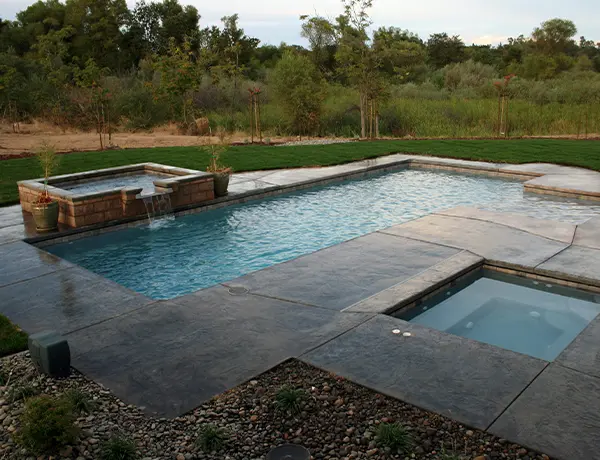
    When designing a pool area, there are so many benefits to incorporating a concrete pool deck. Homeowners may initially think of drab motel pools but have no fear! There are nearly countless options that are beautiful and functional. Let’s take a deep dive into the many opportunities of concrete pool decks.

    Five benefits of a concrete pool deck

    #1: Durability: This is one of the biggest benefits of concrete. A concrete pool deck will look great for a long time, no matter what weather or chemicals it’s exposed to. Any colors or tints that are used will stay fresh and vibrant as long as the proper sealants are used.

    #2: Low maintenance: Cleaning a pool deck with a power washer (we usually recommend once a year) is easy to do since there are no grout lines or annoying gaps to manage.

    #3: Safety: By mixing a non-skid additive into the concrete, you can create a safe environment around any pool. This quick and easy step will be appreciated by any homeowner!

    #4: Affordability: For homeowners, concrete is usually less expensive than options like stone or tile. The labor is typically more affordable, too.

    #5: Customization: This is often considered the primary benefit of concrete – you can create nearly any look or style depending on the stamps and colors used. More on this below!

    Stamping options for pool decks

    Concrete stamps offer nearly unlimited patterns that beautifully create or compliment any desired look whether modern, rustic, industrial, or coastal, just to name a few. With patterns including slate, flagstone, brick, and reclaimed wood, a concrete pool deck can replicate so many natural materials.

    Here are three of our top faves for pool decks (but make sure to check out our full concrete stamp collection!):

    Wood stamps: Get the look of wood without cutting down any trees. These “wood” planks won’t get damaged by moisture or chemicals and they won’t give anyone slivers.

    Slate stamps: Evoke the Mediterranean with timeless slate tiles courtesy of concrete stamps! These tiles won’t chip or crack though, since they have the incredible durability of concrete.

    Random stone stamps: Get the natural beauty of stone with the customization of concrete! Choose from a variety of styles, including sandstone, garden stone, and flagstone.

    At Calico, we carry high-quality products by Proline:

    Seamless Magnetic Pattern Concrete Stamps: These incredible tools make decorative concrete stamping a breeze! The stamps’ magnets link up to  align the grout lines with ease, without any joint touchup or squeeze out. There are no repeat patterns — users just rotate and lock in place. Plus, thanks to their lighter weight, there is less user fatigue and more coverage. Read Proline Magnetic Skins Are a Game Changer!

    Super Skins: These stamps are basically indestructible thanks to a limited lifetime warranty and fiber reinforced composite constructive. They’re twice as stiff as traditional skins yet half the weight. Learn more about Super Skins!

    Color options for pool decks

    No gray concrete here! Look to our wide selection of color options to turn a simple pool deck into a work of art. With our concrete color products by Proline and Smith’s, such as water-based acrylic stains, color hardener, antiquing wash, integral color, and more, you’ll achieve a beautiful look that the homeowners will love for years to come. We see a lot of gorgeous browns and grays, which coordinate well with many homes. Light colors are popular too, since they stay cool and help to achieve a modern, minimalist look.

    Use Proline Color Hardener or Integral Color for creating base color on new concrete and ProStain to freshen existing concrete. For accent colors, consider products such as water-based acrylic stain, EZ-Tique Antiquing Wash, and Antique Release.

    Learn more about the differences between color products and read our FAQ Stamped Concrete Coloring Options.

    Don’t forget the accents and sealer

    The addition of edging, borders, and decorative accents will customize a pool deck and make it unique. Animal track stamps, accent pieces, and medallions can be used to add a special flair and create a cohesive look for the project.

    Sealers are always important and pool decks are no different. Sealers will preserve the concrete and make it a breeze to clean. Plus, these products can help maintain and even intensify the colors.

    A note on safety:

    Safety is so important and it’s required by insurance and building codes. If you’re installing a new pool, be sure to follow the recommended guidelines for your area, whether they include installing a locked gate, adding a pool cover, or using sensors or an alarm system.

    Contact Calico Construction Products

    Need some help? Contact us today at 800-221-9469 for assistance. Our concrete pros are always happy to talk through any problems or questions you might have. If you’re ready to get shopping, shop our selection of concrete stamps, form and edge lines, colors, and sealers. Be sure to follow us on Facebook, Instagram, and Pinterest to learn about our latest product launches and read the latest tips and tricks.

  • The Many Benefits of Applying Epoxy to Your Garage Floor

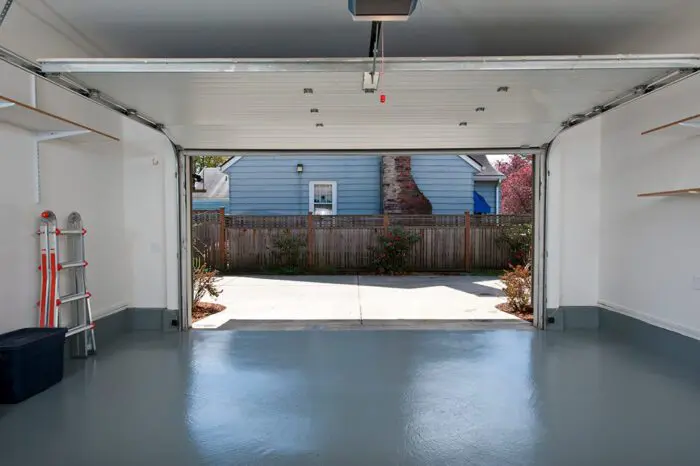
    There was a time when a garage served mainly as a dark, dirty space for parking and stowing away extra storage and trash bins. These days, the garage is a source of pride for many homeowners and an extension of their living space. Installing an epoxy floor can be the perfect finishing touch for those ready to take it to the next level.

    What is floor epoxy, and is it worth the investment?

    Epoxy is a thermosetting floor system made of resin and hardener. It’s a popular floor coating system used for residential and commercial purposes. The rugged and durable finish can transform your garage floor into something equally elegant and functional. In addition, epoxy flooring is exceptionally long-lasting, making it an excellent investment for industrial spaces, garages, basements, and more.

    Epoxy floor coating offers extra protection from harsh elements

    Your garage floor is exposed to water, oil, dirt, and more daily. With a car (or two) constantly coming in and out of it, there is a lot of wear and tear. The strength and durability of epoxy will help protect your floor from extensive damage and preserve it for the long term. On its own, it is very durable. However, we always recommend putting a sealer on top.  By sealing your flooring, you protect the epoxy and the floor from damage and scratching. Proline’s Poly HD sealer works great for epoxy flooring, which covers both the floor and the epoxy to offer protection from scratches.

    Brands like Proline offer different types of epoxy to fit your project needs. Exotic metal epoxy is a 100% solids, two component, epoxy formulation with high strength and is used specifically for metallic flooring. Not only does it create a unique and seamless floor, but it also has excellent impact resistance.

    What are the benefits of epoxy coating?

    Chemical resistant: Epoxy is resistant to a wide range of chemicals, including acids, fuels, and solvents.

    Heat resistant: One incredible benefit to epoxying your garage floor is that it can withstand high temperatures without losing its structural integrity. Making it ideal for use in environments with high temperatures.

    Impact resistant: Epoxy is a strong and durable material that can withstand impact and heavy traffic without cracking or chipping.

    Water resistant: Epoxy withstands exposure to moisture without breaking down. This makes it the perfect choice for outdoor and indoor environments where water is present, especially if your washing machine is in your garage.

    Epoxy coating is a safe and sanitary flooring option for your home

    Your health and safety are always number one, which is why an epoxy floor can be an intelligent choice. Not only is epoxy very easy to clean, but it’s non-porous and resistant to moisture, making it a nearly impossible environment for bacteria growth.

    With epoxy, you can be confident that it will consistently look crisp and clean, and you won’t have to worry about constantly cleaning it. However, it is vital to ensure that the epoxy is installed correctly and well-maintained to ensure its continued safety and sanitation.

    Adding epoxy to your floor is relatively simple with some knowledge and preparation

    Epoxying your garage requires far fewer materials than other types of flooring. Whether you are a professional or a DIY-er, you’ll have less stress about the difficulty of installing it with the proper tools and knowledge of the process. It can be installed relatively quickly, and its flexibility allows it to be added to your existing floor or used for entirely new flooring.

    Epoxy tends to set very fast in the heat and typically takes someone with experience to apply it. If applied to a pre-existing floor, you will need to remove the previous color and then go over it with acetone or alcohol to help clear the surface. If epoxy isn’t mixed correctly or spread too thin, the surface can become tacky and sticky.

    Proline Epoxy is a quick-setting, self-leveling epoxy

    In general, self-leveling epoxy is easy to apply because it self-levels and spreads out across the flooring surface. It quickly creates a single seamless surface across the floor. Self-Leveling Epoxy does have a few challenges, however, because it:

    • Requires you to pour the proper amount for the square footage.
    • Needs special tools — most people will use a prong squeegee to help with appropriate leveling, and a skilled contractor might use a flat squeegee instead.
    • Sets quickly, and there is not much working time when it’s hot.
    • When the epoxy isn’t mixed correctly, it will not set right.
    • Will pit and leave massive holes if the floor is not properly prepared and dusted in advance.
    • Requires a drill mixer and must be mixed for at least four minutes before pouring. Note: Metal epoxy plays by its own set of rules when it comes to preparing for application. Follow the directions carefully!

    Epoxy coating is customizable to suit any design preference and functional needs

    When it comes to appearance, epoxy goes above and beyond. You’ll get a shiny and smooth surface that will always be a pleasure to look at. You can customize the floor with your choice of color or pattern, giving it an added layer of personality. One option you can explore is the Proline exotic metal epoxy. It is designed to create elegant, beautiful, and unique seamless floors while offering high strength and excellent impact resistance.

    Add flare to a plain or dull concrete surface with Proline’s DecoFlake

    If you’re planning to epoxy your garage floor, Proline’s DecoFlake may offer the unique appearance you want. DecoFlake is a blend of colored flakes that can be added to epoxy to create various visual effects. It’s a great and customizable option! To incorporate, dust the flakes onto poured epoxy until you achieve the perfect look.

    Check out our entire concrete resurfacing page to find some other Proline products that can help with your seamless epoxy installation.

    Interested in more? Check out our Pinterest board for more great epoxy garage ideas! If you’re ready to update your garage floor, contact us today. We’re standing by to answer your questions! Just give us a call at 800-221-9469.

  • Benefits of Staining Concrete

    Enhance the Look and Longevity of Your Project with Concrete Stain

    Looking for a cost-effective way to add an extra layer of style and strength to your concrete project? Great for indoor and outdoor applications — commercial or residential — applying stain is an excellent, affordable, and low-maintenance way to enhance the appearance of any concrete project.

    Concrete staining is a decorative concrete technique that adds color and texture to plain concrete surfaces. Stain is excellent for all types of concrete projects, including floors, driveways, patios, sidewalks, and walls. As a bonus, staining a concrete’s surface is relatively inexpensive. It can be done on existing concrete, eliminating the need for costly removal and disposal of old flooring.

    What concrete stain is better for your project?

    The two most common types of concrete stains are acid-based stains and water-based stains. The primary difference between these two types of stains is how they interact with the concrete:

    • Acid-based concrete stain is great for outdoor use and offers a more natural color by penetrating the surface and reacting with the calcium hydroxide (hydrated lime) in the concrete.
    • Water-based concrete stains use pigments, rather than a chemical reaction, that flow into pores to bond with the cement. They sit closer to the surface (allowing for more vibrant color tones) and are less likely to permanently change the concrete’s color. Most water-based concrete stains are also more user-friendly, less toxic, and more environmentally friendly than acid-based stains.
    Brick Stamped Concrete Patio

    For concrete staining success, surface preparation is key

    Regardless of whether you’re planning to apply an acid-based or water-based concrete stain, preparation is important, especially if you’re staining existing concrete. Consider investing in Smith’s Green Clean Surface Prep, a non-corrosive biodegradable gel that will prepare your concrete for staining. A major benefit is that you can use it both indoors and outdoors.

    There are countless possibilities for customizing your concrete color

    Concrete stains come in many colors and design options. Here at Calico, we offer water-based acrylic stains, acid stains, Pro-Stain, and more. We have a wide variety of Proline products that can help bring your concrete inspiration to life.

    Check out our FAQs to learn more about the stamped concrete colors and tint options we offer.

    Concrete staining is a durable and long-lasting solution for both residential and commercial spaces

    Because concrete stains penetrate the surface, their color resists fading, flaking, and peeling while preserving its stunning color. Staining is considered an excellent option for both residential and commercial use. It can also stand up to heavy foot traffic and harsh weather conditions, making it suitable for indoor and outdoor surfaces.

    Seal your stained concrete for a long-lasting solution

    Stained concrete, while durable, does wear down over time. Properly sealing the concrete will help protect it for significantly longer. Then, you’ll only need to run a damp mop over the surface from time to time and avoid using both harsh chemicals and abrasive materials to prolong its life.

    • The longevity of a concrete stain can vary depending on several factors, including:
    • The quality of the product used
    •  The surface preparation
    • The application method
    • The level of exposure to wear and tear

    If you’re looking to give your concrete a personalized touch, check out Smith’s Color Floor-Bright Lights, a concrete seal that offers a natural appearance and is water-submersible, a neutralizing agent, and both weather and UV light resistant.

    How long does concrete stain last?

    Generally, high-quality stains that are applied and sealed correctly can last for several years before they start to fade or wear down. Over time, the color will fade and may need to be reapplied to maintain the desired appearance. Regularly cleaning and resealing the surface will prolong the life of your stained concrete and keep it looking fresh and vibrant.

    Put a custom look on your next concrete project by applying a vivid stain!

    Call 800-221-9469 to contact Calico Construction Products’ concrete experts, who are ready to answer your questions.

  • All About Calico Construction Products

    Welcome! We’ve had a lot of new customers recently, so we wanted to share a little bit more about our company and products. It’s important to us that you know our story, what we do, and why we can offer you the best decorative concrete stamps, stains, and accessories.

    What we do

    Here at Calico, offering competitively priced, high quality decorative concrete products has been our mantra since we opened in 1971. Why? We love that concrete can be used to create so many wonderful and durable things like tables, sinks, bookcases, and more. There are almost limitless opportunities to turn any concrete project into a striking, functional, and unforgettable piece of art.

    We’re proud to be an authorized distributor for Proline concrete stamps and tools which produce the best quality concrete products available on the market today.

    Whether you’re a contractor or a DIY enthusiast, if you’re looking to beautify, transform, color, restore, repair, or protect a concrete project, we can help!

    Get inspired! Learn more about our decorative concrete products

    Let’s dive into our main product categories, and break down how they can each offer impactful and memorable additions to your next concrete project.

    Add a stylish touch with concrete stamps

    This is the heart and soul of Calico Construction Products! We offer the full line of Proline concrete stamps including Ashlar stone, brick, cobblestones, slate, sandstone, granite, reclaimed wood, and more. Plus, we carry Proline’s super skins, a more convenient way to stamp thanks to their lightweight and increased rigidity. Table and patio concrete molds create durable and stylish furniture and medallion stamps are a popular way to create beautiful statement pieces.

    From a wide variety of textures, skins, and border art to custom stamps, accent pieces, and animal tracks for personalized touches, you’ll have the tools you need to make your project a work of art.

    Simplify your projects with our concrete stamp packages

    Do you like saving money while completing your project with ease? So do we. This is where our Proline concrete stamp packages come in. We offer a wide variety of packages for your decorative concrete needs, including Ashlar stone, slate, tile, reclaimed timber, limestone, and more. Most packages contain the minimum number of stamps and accessories recommended for the pattern, and our seamless packages and seamless magnetic pattern stamp packages will save you time on the job site — just rotate and lock in place for perfectly aligned grout lines.

    Proline Running Bond Brick Blue Concrete Mat

    Complete your decorative concrete project with form & edge liners

    Concrete Form & Edge Liners are incredibly useful because they are used to act as a mold for the concrete to be formed against. Unique to the industry, Proline’s edge liners are designed to fit form lumber and complete your decorative concrete projects. Available in a variety of realistic natural stone textures, you’ll be able to create outdoor fire pits, fountains, countertops, steps, walls, and more with these decorative form liners. Lightweight and high quality, Proline’s flexible and reusable concrete edge liners transfer texture to edges, corners, and risers.

    Add a unique touch to your project with our vast selection of concrete colors and stains

    Concrete stamps are great on their own, but can be elevated with magnificent color by adding colors and stains. We offer an extensive collection of water-based acrylic stains, acid stains, color hardener, antiquing wash, integral color, and more. For a vibrant look, add color to wet concrete, or  a translucent effect with stains. Consider adding sparkling color with GEM-TEX™, a decorative concrete hardener. To learn more about colors and tints, read our answers to frequently asked questions about our stamped concrete coloring options.

    Shop our wide variety of protective and decorative concrete sealers and finishes

    After you’ve added some beautiful color to your concrete project, you’ll want to maintain its color and intensity, make the surface easier to clean, and reduce freeze-thaw damage. For this we offer a wide variety of protective and decorative Proline concrete sealers and finishes. Our solutions include solvent-based clear sealers in high gloss or matte, as well as products for interior or exterior uses and those that increase slip resistance, repel water, or are UV resistant.

    Nature-Shield Concrete Sealer

    Finish your project with ease with our accessories and tools

    In addition to selecting your concrete stamps, color, and finishes, make sure you also have the accessories and tools needed finish your decorative concrete project with ease! We have high quality Proline tools in a variety of sizes, whether you need chisels, tampers, joint texturing strips, or touch up wheels.

    Concrete Stamps - Sample Ring of Seamless Texture Skins

    Questions? Contact us!

    Ready to get started on your next decorative concrete project? Contact Calico at 800-221-9469 to chat with our concrete pros, who are happy to talk through any problems or questions you have. Or if you’re ready to get shopping, shop our selection of concrete stamps, form and edge liners, colors, and sealers.

    Be sure to follow us on Facebook, Instagram, and Pinterest to learn about our latest product launches and read the latest tips and tricks.

  • The Benefits of Concrete Driveways

    Do your customers ever ask about the advantages of a concrete driveway versus an asphalt driveway? Often it can be difficult to convince a homeowner who has their heart set on asphalt to consider concrete instead because they’re concerned about the higher upfront costs. In this situation, what can you say to help clients see concrete in a different light? Here are four reasons why concrete is a great option for driveways (and other high-traffic surfaces).

    Why consider concrete, over asphalt, for your next driveway project?

    • Lasts for decades
    • Low maintenance
    • Lower life cycle cost
    • Can be extremely customized and designed
    Ashlar Stamped Concrete Driveway

    Durability

    Concrete is a sturdy option that will last up to 50 years, depending on climate and maintenance. Cracking and wearing may occur, of course, but concrete can be patched and repaired. In comparison, asphalt will last about 20 years. While asphalt is more easily repaired, it’s also considerably more prone to deterioration and damage since it’s softer than concrete.

    Both asphalt and concrete have climate considerations that affect durability. Concrete can be sensitive to extreme cold and can buckle, especially if not properly maintained.  On the other hand, the softness of asphalt makes it a less than ideal option for regions that experience high temperatures. Asphalt  becomes gooey when it’s hot and then hardens again when the temperature lowers. This softening and hardening cycle can cause the asphalt to sag or crack over time.

    Maintenance

    Concrete is relatively low maintenance. It may need to be cleaned with a brush annually. Most contractors recommend applying sealer every few years because it helps to preserve the concrete, can intensify the colors, and makes it easier to clean. More importantly, sealers can prevent damage from freeze-thaw cycles mentioned above. Asphalt is a more hands-on driveway material. Six to twelve months after installation, an asphalt driveway should be sealed, and this process should be repeated every three to five years.

    Life cycle cost

    Looking at the initial price of concrete versus asphalt, the latter does win out. Concrete can be two to three times more expensive than asphalt, but that’s not the end of the story. When you look at the whole life cycle of both materials and what they’ll cost during their lifetimes, concrete usually comes out on top thanks to its long life and low maintenance costs.

    Decorative options

    There’s no comparison here. Asphalt is black or dark gray. Sure, concrete is pale gray but many homeowners are unaware of how customizable it can be thanks to Proline concrete stamps and nearly endless color options. Concrete can be stamped to look like practically any other material;  stones, brick, tile, and even wood for example. With tinting and coloring products, concrete can truly be a work of art.

    To summarize

    • Concrete is more durable.
    • Concrete has an average lifespan of 50 years.
    • The only maintenance required is applying sealer every few years.
    • Concrete can be stamped with patterns, textures, and designs
    • Concrete can be tinted and stained with different colors and finishes.

    Find everything for your concrete project

    Calico Construction Products has the full line of Proline concrete stamps, colors, and more. Come shop with us or feel free to give us a call at 800-221-9469 with any questions. We’re here to answer your questions and help you find the best products for your job!

    Concrete News & Tips

  • Our Most Frequently Asked Questions About Stamped Concrete

    Here at Calico Construction Products, we know concrete well and we know how to help make it look great. Our customer service team fields a lot of questions, so we wanted to share a few that we hear on a regular basis.

    Take a look and let us know if you have more to add to the list!

    Can faded or cracked concrete be repaired?

    In most cases, yes! While concrete isn’t immune to deterioration from age, there are often ways to refresh and repair it. If your tinted concrete has simply faded over time, products like Proline’s Accent Water-Based Acrylic Stain, or EZ-Tique Antiquing Wash can restore your dull concrete. They are easy to use and give faded concrete a nice pop of color. Your surface must be porous, though, for the coloring product to adhere.

    Overlay is an effective and affordable way to repair cracked concrete. Once fixed, the concrete can be stamped and colored like new. For concrete overlays, use Proline’s Color Packs for your base color and products like Accent or EZ-Tique for highlighting and antiquing. This would replace color hardener and antique release in this application. Proline Pro-Stamp, a strong stampable overlay, transforms plain concrete into a surface that can be stamped with any decorative, textured finish. Proline ProSurfacer, a high strength polymer concrete overlay, is another product that can restore and repair stained and cracked concrete. This can be colored, broom finished, stained, the possibilities are endless. It is used in several overlay applications and can even be used as a patch and leveling compound that can fill and repair uneven concrete.

    Do I need more than one stamp to effectively stamp concrete and what is a “package” of concrete stamps?

    Yes, most times stamping concrete requires more than one stamp. Things to consider when deciding on how many stamps are needed for the project: How large is it, how much can I stamp before the concrete gets too hard? Where am I going to walk/stand while placing the pattern? Are there multiple pieces that work together to complete the pattern, i.e. an “A,” “B,” and/or “C,” stamp? We’ve listed the dimensions of all of our stamps online to assist in laying out your project.  Concrete stamps are designed to be used in multiples. Seamless stamps overlap while patterned concrete stamps are placed next to each with no gaps in between. The general recommendation is that you should have enough stamps to cover the width of the project, plus two.

    So what’s in a package of concrete stamps? Our packages contain the minimum number of stamps and accessories recommended for each pattern. This generally includes six rigid stamps, one thin flex, two touch-up skins, and the recommended chisels and/or wheels that best fit the pattern.

    Do I need to seal my concrete after stamping and coloring?

    Yes. Sealing maintains the color of your concrete. Sealing concrete enriches the color intensity — whether the color is integral, a stain or dye, or from color hardener. Sealers can add sheen to the concrete such as a high gloss or no sheen like a matte. Concrete sealers block the penetration of dirt, oil, grease and chemicals, and make the concrete surface much easier to clean. Sealers prevent water intrusion which can minimize freeze-thaw damage. Concrete sealers also help to prevent wear and tear from high foot and auto traffic areas.

    Concrete should be sealed every two years or more frequently if it’s exposed to extreme weather.

    What are release agents?

    You should always use a release agent. This substance, which is a bond breaker, prevents the concrete from sticking to the concrete stamps. Apply the release agent in either a liquid or powder form. Work as you go and don’t get too far ahead of the stamping.

    Traditionally there are two types of release, liquid and powder. Proline’s Antique Release powder comes in over 20 colors. Keep in mind: do NOT use powdered release on Proline’s Seamless Magnetic Skins.

    Proline’s Dura-Liquid Release promotes the release of stamps and texturing tools. Improve your results by ensuring tools don’t stick to wet concrete! The release is applied to the face of tools and skins, and directly to the surface of fresh concrete before stamping. This liquid product is less messy to apply than powders but it provides no color. For adding an antiquing color similar to that of what is produced with colored powder release, check out EZ-Tique.

    How can I add a base color to concrete?

    Concrete can be stained and tinted in a wide variety of colors and tones, and there are a few ways to accomplish this:

    • Color hardener is a popular technique that involves broadcasting the product onto wet concrete and then working it in with a trowel. Only the top surface is colored, so the color tends to be more intense. Since color hardeners increase the strength of concrete, they’re a great choice for outside projects and interior floors with heavy traffic.
    • Integral color is added to concrete prior to pouring. The color is consistent throughout the slab and won’t fade from exposure, but color is less vibrant than what you see with color hardener.

    Shop Calico Construction Products

    We have everything you need for your stamped concrete project. We take pride in helping our customers create fantastic concrete surfaces with our expertise and attention to detail. Browse our online store and contact us at 800-221-9469 if you have any questions!

    Concrete News & Tips

  • Garage Trends to Watch In 2021

    It’s safe to say that everyone is ready to leave 2020 behind. So, let’s take a glimpse into 2021 and discuss what’s going to be hot next year in the world of garages. Whether you’re a homeowner or a contractor, you’ll love these practical yet on-trend ideas.

    Trend #1: Garage Conversions

    Throughout the pandemic, homeowners have found themselves in need of more space as they work, learn and exercise from home. Since we’re unable to leave the house as often as we used to, it’s important we make the best use of our available space so family members can get some much-needed alone time. But when all of the rooms in a house are maxed out, where can a homeowner turn? Garage conversions are big business and there’s no sign they’re going away. Check out these popular trends:

    Gyms: Many of us miss going to our gyms but we might not be comfortable taking the risk to work out in one or else the heightened restrictions may be too onerous. Plus, there are fewer gyms open now since many have gone out of business. That’s why a converted garage space is perfect for a home gym. You can work out safely and conveniently, no matter if you like running on a treadmill, lifting weights, or doing yoga. While certain equipment requires a serious investment, there are plenty of bodyweight exercises you can accomplish with minimal cost, especially with the plethora of free or low-cost online workout options that are available nowadays. What features should you consider in a garage gym conversion?

    • Heating and cooling, depending on your climate. A ductless mini split is a great option for ensuring your workout space is comfortable throughout the year.
    • Storage for workout equipment is important so your space stays organized and looks nice. Wall-mounted racks are convenient for securely hanging heavier items while cabinets and drawers can be used for accessories and smaller equipment.
    • A practical new floor means you’ll be enjoying your space for years to come. Renovating a stained, ugly concrete floor is a durable, long-lasting way to pull together your new area. Consider adding rubber floor mats for comfort and to reduce impact.

    Offices: If you lack a stand-alone office or a spare bedroom, your garage might be a great place to gain workspace. Start by upgrading the area to ensure it’s comfortable. You might redo a concrete floor by stamping it to mimic stone, tile, wood, or much more. Concrete is extremely versatile and there are many options for creating a beautiful interior floor. Once the flooring is done, decide if your walls need insulation and another layer of drywall to make the space look more polished. Finally, determine what kind of upgrades the garage door will need. There are many options for turning ugly, poorly insulated doors into attractive ones that are well-insulated but also let in plenty of light. Once your space is finished, the fun begins as you can arrange desks, computers, monitors, and seating in a way that inspires you and promotes productivity. Use rugs to add coziness and differentiate separate areas and add bookshelves, pictures on the walls, and plenty of lighting.

    She sheds and He sheds: Most of us need a little extra space these days. If you’re needing more room for self-care, hobbies, or whatever else you enjoy, take the same steps listed above to create a comfortable inside space. Then, the options are nearly limitless for what you can do! Consider a space for:

    • Crafts or hobbies
    • Gardening
    • A home theater
    • Meditation or yoga
    • Gaming (either video games or board games)
    • A home library
    • Art or writing

    Trend #2: Extra Storage

    If your home is starting to feel a little cramped, consider using your garage to declutter the rest of your space. Be clever about your organization and you might be able to store a lot of extra items in the garage. Most garages have an excess of unused vertical space, so wall-mounted shelving systems are a smart way to make the most of the area while saving floor space for larger items, like your cars! Track systems and hooks are another good option for getting large or unwieldy items out of the way. Cabinets or storage racks with bins are perfect for hiding odds-and-ends or items you don’t want to look at.

    Make sure to use the ceiling if you’re able to. Ceiling-mounted racks are great storage for infrequently used items like holiday décor. By creating garage storage, you’ll free up your closets and other crowded areas in your home. Kick back and relax in a spacious and tidy house!

    Trend #3: Amped Up Aesthetics

    Ok, this is why we’re here – we love talking about a beautiful concrete garage floor! There are so many pros to a concrete floor. Concrete floors are incredibly durable. Hard and strong, they’re not easily damaged and are therefore not only suitable for heavy cars and equipment but for most any type of use. Plus, they’re fairly easy to maintain when properly sealed. The ability to add radiant heat underneath is a definite bonus when concrete is used in interior projects. But in our humble opinion, the decorative options of concrete are its biggest benefit:

    • The texture options of concrete, achieved by using Proline stamping tools, are numerous and vary widely. Whether you want the look of stone, reclaimed wood, tile, or cobblestone, you’ll find a stamp that’s suited for you. Don’t forget to make the floor special by including a hand-crafted accent piece, a seamless accent piece, or a focal point medallion stamp.
    • Colors are another area where concrete shines. A vibrant look is achieved when dyes are added to wet concrete. Stains are perfect when a translucent look is wanted. Color hardeners can be used on fresh concrete for surface coverage. Shop all our color options and find your inspiration.
    • Finally, round out your look by polishing your concrete floor to achieve a smooth and shiny finish, or apply an acid stain for a breathtaking marble-like appearance.

    Want more inspiration for your stamped concrete project? Check out our beautiful Project Gallery!

    Contact Calico Construction Products for Your Garage Floor Needs

    If you have a big garage project planned for 2021, contact us at 800-221-9469 or through our online form. Here at Calico, we’re thrilled to offer the full line of high-quality Proline concrete stamps. We take great pride in offering top of the line customer service, attention to detail, industry knowledge, and expertise. Let us help you achieve your dream garage!

    Concrete News & Tips

  • Contractor Tips To Grow Your Business Through Social Media

    As a small business, our days are often so busy that we have little time for marketing and promoting ourselves. That’s why we work with Stellaractive, a web design and digital marketing agency. The marketing team at Stellaractive helps us write blog posts, update our website, and run our social media accounts. Given their experience, they’ve come up with a few tips that might help our own customers promote themselves. If you’ve been interested in growing your customer base, please read below for some easy social media tips. And if you’re a homeowner? There’s something here for you too! Learn how to share your work in the decorative concrete community and benefit from decades of experience.


    Social media marketing

    Does your business use social media? It might feel like too much work or, even worse, a pointless task. We’re not going to tell you that you need to be staring at Facebook 24/7, but consider that you have useful and interesting knowledge and people want you to share that knowledge. Connect with customers (and potential customers!) in the spaces where they already spend their time – online! By posting regular content on a few social media outlets, you’ll enhance your visibility and customers will naturally think of you when they need your services. Where should you focus your social media efforts and what type of content should you post?

    • Love it or hate it, Facebook should be at the top of your list. In the U.S. alone, the platform has 190 million users. It’s a convenient way build awareness of your business while increasing trust. Facebook is also great for having personal conversations and letting users know the people behind your brand. Facebook should be used to share information and engage with followers. While organic reach is low, it’s still important to have an up-to-date and active page in order to build brand legitimacy.
    • Instagram is a visual platform so only consider using it if you’re able to generate enough quality, interesting images. Like Facebook, Instagram is a very popular platform with over 110 million U.S. users. What’s more? Over 75% of businesses use Instagram. Even if you’re not using Instagram, there’s a good change that your competitors are using it. By sharing project photos and how-to videos, you’ll display your skill and inspire followers.
    • Pinterest, another visual platform, serves as a virtual bulletin board where uses can save (or “pin”) images that inspire and interest them. If you’re a contractor serving homeowners, then it’s likely your potential customers are scrolling through Pinterest seeking home improvement ideas.

    Other social media options that may or may not be right for your business include Twitter, YouTube, LinkedIn. Blogging is another marketing opportunity to consider.

    Social media tips:

    • You don’t need to post daily if you don’t have the bandwidth but make sure you post consistently, even if it’s just once or twice a week.
    • Don’t get too wordy with your posts – keep them short and sweet! – and make sure to include an image.
    • Share updates about your business/services/products and make sure to include relevant info about your industry.
    • Share the great reviews you receive from your customers.
    • Start building a stockpile of images! They don’t have to be professional but ensure the photos are well-lit, clear, and show off your project.
    • Share info about your employees and business.
    • Consider using targeted ads on Facebook, which can expand your reach with an affordable budget.

Google My Business

To find new customers, you need to be visible when they search for your company or your services. A strong presence on Google My Business is necessary to show up on searches on in Google Maps and to get placed in the top results. A listing will show your address, contact info, hours, and customer reviews. It’s an important way to improve your local SEO and boost your credibility. Plus, it’s free to set up an account!

For Homeowners

If you’re enjoying a great new patio, driveway, walkway, or garage floor, snap a photo or video and share it! We’d love to see your finished project – simply email us and share the name of your contractor or tag us on social media. We’re active on Pinterest, Instagram, and Facebook. There’s also an active, helpful community online that thrives on sharing ideas, inspiration, and tips. Check out the Concrete Network for great resources or search Instagram for relevant, active hashtags. Try: #stampedconcrete #stampedconcretepatio #decorativeconcrete #prolinestamps #concrete

How Calico can help

Here at Calico Construction Products, we’re happy to help promote your business! We love to share your concrete creations on our social media and in our Idea Gallery. We also hold special promotions like this photo contest. Plus, we’re currently seeking contractors to profile on our blog. If you’re interested in any of these opportunities, simply contact us at info@calicoproducts.com or at 800-221-9469.

Concrete News & Tips

,
  • To Seal or Not to Seal Concrete

    Not sure if you should use a sealer on your new concrete patio, driveway, or walkway? While it might be tempting to skip one more step, we highly recommend that you seal your concrete project! Whether it’s to enhance colors or to repel stains, sealers are a vital step in most concrete jobs.

    Concrete Sealers are a must!

    While sealers are usually the last step of your decorative concrete project installation, you should re-seal your concrete every 2 years (and even more frequently if your concrete is exposed to extreme weather conditions). Sealing concrete helps to maintain and enrich the color of concrete, whether the color is integral, a stain, a dye, or from color hardener. Sealers can add sheen to the concrete, such as a high gloss, or no sheen at all, like a matte. Concrete sealers block the penetration of dirt, oil, grease, and chemicals while making the surface much easier to clean. Concrete sealers also help to prevent wear and tear from high foot and auto traffic areas.

    What type of sealer do you need?

    You should first take into account your state’s requirements on volatile organic compounds (VOCs). Sealers with higher VOC levels may not be legal in your state. For example, Californians are only permitted to use sealers with a VOC no higher than 100.

    The most common concrete sealers are acrylic-resin based sealers. Acrylic sealers are cost-effective and often blended with epoxies, polyurethanes, or silicones to improve performance and water resistance. Acrylic sealers are available in many forms with some performing far superior to others. A less expensive, lower performing sealer, such as one composed of styrene-acrylic, may yellow and degrade when exposed to sunlight or extreme weather conditions. The best type of sealer is a pure acrylic resin sealer that will last longer with no yellowing.

    There are other types of sealers such as polyurethanes, epoxies, and penetrating resins. In general, the epoxy or polyurethane sealers cost more than acrylics and tend to be more slippery. They also may not allow for moisture vapor to move out of the concrete if applied incorrectly. If the sealer doesn’t allow for moisture vapor and air to move in and out, a white hazing or fogging can occur. This can be prevented by avoiding moisture in the sealing process.

    Follow the concrete sealer instructions!

    We highly recommend you stick to manufacturer recommendations for allowing concrete to cure fully before applying a sealer and for the appropriate surface preparation. Pay attention to the temperature and weather forecasts as well, because applying while too hot or too cold or being surprised by a rain shower can cause issues. Also, be sure to apply the sealer to the appropriate thickness required for the sealer. Applying a sealer too thickly will prevent the water moisture from passing through the sealer and result in a foggy appearance. MSDS and product information sheets are available for all of the sealers we sell at Calico Construction Products. Read them fully before applying the sealer and call us at 800-221-9469 or send an email if you have any questions.

    Sealers protect concrete, too

    It’s important to select a sealer that will protect your decorative concrete from foot traffic and weather. Keep these tips in mind:

    • If you are sealing a driveway or garage that will be subjected to grease and oil, you’ll need a product that specifically repels these stains while resisting water intrusion and abrasions.
    • The sealer primarily recommended for exterior concrete flatwork is a solvent-based or water-based acrylic.
    • For interior concrete work, a sealer with good resistance to scuffs and stains such as polyurethane or epoxy would be best and easiest to maintain.
    • A good concrete surface protector such as Calico Top Finish can add extra protection to your sealed concrete surface.
    • Acrylic sealers are often used on exterior concrete surfaces because they breathe well and provide good water resistance.
    • Epoxies are excellent for water repellence and oil and grease spills but must be applied correctly to prevent the restricted release of moisture vapor.

    Don’t slip

    If you are nervous about slick concrete there are many products available to decrease the slickness of the surface. Calico Aluma Grip comes in coarse or regular and provides slip resistance. It’s typically tossed in the air and broadcast on the surface of still wet coatings. It’s excellent around pools or food preparation areas and recommended for use with Calico’s solvent-based acrylic and acrylic urethane 2C sealers. Proline’s Dura Grip also provides slip resistance. This non-abrasive micronized polymer can be easily mixed into most sealers without affecting viscosity. It’s a great way to add slip resistance to a high-traffic decorative concrete project, such as patios and walkways.

    One place for all your concrete needs

    Calico Construction Products is your source for the best in concrete sealers, as well as Proline concrete stamps, tints, accessories, and more. To find out more about the sealers we offer, please read our Frequently Asked Questions or contact us at 800-221-9469. We’re here to answer all your questions and help you find the right product for the job!

    Concrete News & Tips